
Top Fixed Deposit Schemes with Highest Returns in India 2026
Complete Guide to Maximum Returns, Bank Comparison & Expert Investment Strategies
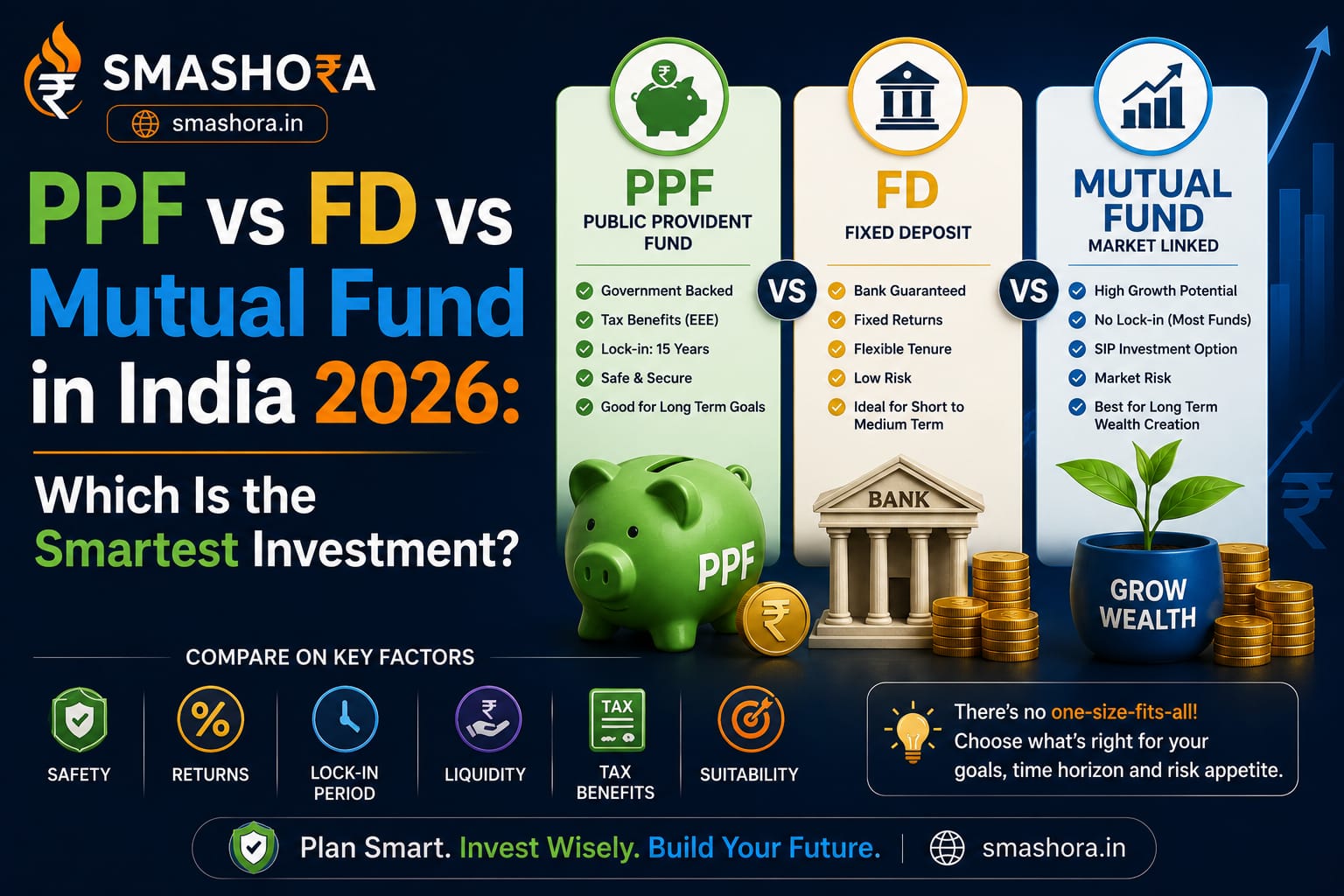
Introduction: Why Fixed Deposits Remain the King of Safe Investments in 2026
In today's unpredictable financial landscape, where stock markets fluctuate wildly and economic uncertainties loom large, finding a safe haven for your hard-earned money has become more crucial than ever. Fixed Deposits (FDs) have stood the test of time as one of the most reliable and trusted investment instruments in India, and 2026 is no exception.
Whether you're a young professional planning your first investment, a middle-aged individual saving for your children's education, or a senior citizen looking for regular income, Fixed Deposits offer something for everyone. The beauty of FDs lies in their simplicity – you deposit a lump sum amount for a predetermined period, and the bank pays you a fixed rate of interest. No market risks, no sleepless nights watching Sensex numbers, just guaranteed returns.
What's particularly exciting in 2026 is that Small Finance Banks are offering unprecedented interest rates of up to 8.60% per annum for regular depositors and an impressive 9.10% for senior citizens. These rates are significantly higher than what traditional public sector banks offer, making this the perfect time to explore your FD options and maximize your returns.
What You'll Learn in This Comprehensive Guide
- ✅ Top 20 banks offering the highest FD interest rates in 2026
- ✅ Detailed comparison of Small Finance Banks vs Public Sector Banks vs Private Banks
- ✅ Special FD schemes for senior citizens with maximum benefits
- ✅ Tax-saving Fixed Deposits and how to save under Section 80C
- ✅ Step-by-step guide to opening FD online and offline
- ✅ Hidden charges, penalties, and premature withdrawal rules
- ✅ FD calculator and real-life investment examples
- ✅ Expert tips to maximize your FD returns in 2026
Chapter 1: Understanding Fixed Deposits – The Foundation of Secure Investing
What Exactly is a Fixed Deposit?
A Fixed Deposit, commonly known as FD or Term Deposit, is a financial instrument provided by banks and Non-Banking Financial Companies (NBFCs) that allows you to deposit a lump sum amount for a fixed period ranging from 7 days to 10 years. In return, the bank pays you interest at a predetermined rate that remains constant throughout the tenure, regardless of market fluctuations.
Think of it as a contractual agreement between you and the bank: you promise to keep your money with them for a specific period, and they promise to pay you a fixed rate of interest. This mutual commitment provides stability and predictability – two qualities that are invaluable in today's volatile economic environment.
How Does a Fixed Deposit Work?
Let's break it down with a simple example. Suppose you invest ₹1,00,000 in a Fixed Deposit for 3 years at an interest rate of 7.5% per annum. Here's what happens:
- Principal Amount: ₹1,00,000 (the amount you deposit)
- Tenure: 3 years (the lock-in period)
- Interest Rate: 7.5% per annum (fixed and guaranteed)
- Maturity Amount: ₹1,24,230 (approximately, with quarterly compounding)
- Total Interest Earned: ₹24,230
The interest can be paid out at regular intervals – monthly, quarterly, half-yearly, or annually – depending on your preference. Alternatively, you can opt for the cumulative option where the interest is reinvested and paid along with the principal at maturity, giving you the power of compounding.
Chapter 2: Why Fixed Deposits Are Smarter Than Ever in 2026
1. Guaranteed Returns
Unlike mutual funds or stocks where returns are market-linked and uncertain, FDs offer 100% guaranteed returns. The interest rate you book today remains fixed for the entire tenure, providing complete income certainty. This is particularly valuable in 2026 when economic uncertainties make predictable returns highly desirable.
2. Capital Protection
Your FD investments are insured up to ₹5 lakh per bank per depositor under the DICGC (Deposit Insurance and Credit Guarantee Corporation) scheme. This means even if a bank fails, your money is safe. This insurance cover applies to all scheduled banks, including Small Finance Banks, making FDs one of the safest investment options available.
3. Higher Interest Rates
In 2026, FD interest rates are at attractive levels, with Small Finance Banks offering up to 8.60% for regular depositors and 9.10% for senior citizens. These rates are significantly higher than savings account interest rates (typically 3-4%) and provide better post-tax returns than many other low-risk instruments.
4. Tax Benefits
Tax-saving Fixed Deposits with a 5-year lock-in period qualify for deduction under Section 80C of the Income Tax Act, allowing you to save up to ₹1.5 lakh per financial year. This makes FDs a dual-benefit instrument – you get guaranteed returns plus tax savings.
5. Flexible Tenure Options
Whether you need to park your money for 7 days or 10 years, FDs offer remarkable flexibility. You can choose tenures that align perfectly with your financial goals – short-term FDs for emergency funds, medium-term for specific goals like vacations or down payments, and long-term for retirement planning.
6. Loan Against FD
Need urgent funds? Instead of breaking your FD and losing interest, you can avail a loan against your Fixed Deposit at competitive interest rates (typically 1-2% above FD rate). You continue earning interest on your FD while meeting your liquidity needs – a win-win situation!
Chapter 3: Top 20 Banks Offering Highest FD Interest Rates in 2026 – Complete Comparison
After extensive research and analysis of over 50 banks and financial institutions, we've compiled the definitive list of banks offering the best Fixed Deposit rates in 2026. This comprehensive comparison will help you make an informed decision and maximize your returns.
📊 Top 20 Banks – Highest FD Rates Comparison (July 2026)
| Bank Name | Highest Rate (% p.a.) |
1-Year Rate (% p.a.) |
3-Year Rate (% p.a.) |
5-Year Rate (% p.a.) |
Senior Citizen Extra Interest |
|---|---|---|---|---|---|
| Unity Small Finance Bank | 8.60% | 7.00% | 8.00% | 8.00% | +0.50% |
| Suryoday Small Finance Bank | 8.40% | 7.90% | 8.40% | 8.00% | +0.40% |
| Utkarsh Small Finance Bank | 8.25% | 6.25% | 8.25% | 7.75% | +0.50% |
| Jana Small Finance Bank | 8.20% | 7.50% | 7.75% | 8.20% | +0.50% |
| Shivalik Small Finance Bank | 8.05% | 6.00% | 7.50% | 6.50% | +0.50% |
| Ujjivan Small Finance Bank | 8.05% | 7.90% | 7.20% | 7.20% | +0.50% |
| SBM Bank | 8.05% | 7.50% | 7.30% | 7.75% | +0.50% |
| Equitas Small Finance Bank | 7.80% | 7.60% | 7.50% | 7.25% | +0.50% |
| DCB Bank | 7.75% | 7.25% | 7.25% | 7.25% | +0.50% |
| Bandhan Bank | 7.75% | 7.75% | 7.25% | 5.85% | +0.50-0.75% |
| ESAF Small Finance Bank | 7.75% | 5.00% | 6.25% | 6.00% | +0.50% |
| CSB Bank | 7.40% | 5.00% | 5.75% | 5.75% | +0.50% |
| RBL Bank | 7.30% | 7.10% | 7.10% | 7.00% | +0.50% |
| Jammu & Kashmir Bank | 7.30% | 6.75% | 6.75% | 6.50% | +0.50% |
| AU Small Finance Bank | 7.25% | 7.00% | 7.50% | 6.75% | +0.50% |
| Dhanlaxmi Bank | 7.25% | 6.50% | 6.50% | 6.75% | +0.50% |
| Bank of Maharashtra | 7.15% | 6.25% | 6.30% | 6.25% | +0.50% |
| YES Bank | 7.10% | 6.75% | 7.10% | 6.75% | +0.50% |
| Indian Overseas Bank | 7.10% | 6.70% | 6.30% | 6.30% | +0.50% |
| Nainital Bank | 7.05% | 6.50% | 6.25% | 5.75% | +0.50% |
*Data as of July 2026. Rates subject to change. Please verify with respective banks before investing.
💡 Key Insight:
Small Finance Banks dominate the top positions with Unity Small Finance Bank leading at 8.60%, followed by Suryoday Small Finance Bank at 8.40%. These banks offer significantly higher rates compared to traditional public sector banks like SBI (6.45%) and HDFC Bank (6.60%). However, all scheduled banks including Small Finance Banks offer DICGC insurance up to ₹5 lakh, making them equally safe for deposits up to this limit.
Related Reading from Our Website:
If you're interested in special FD schemes, don't miss our detailed article on the SBI Amrit Vrishti 444-Days Term Deposit Scheme offering 7.25% interest rate – a popular choice among conservative investors looking for guaranteed returns from India's largest public sector bank.
Chapter 4: Small Finance Banks – The Game Changers Offering Maximum Returns
Why Small Finance Banks Offer Higher Interest Rates
Small Finance Banks (SFBs) have emerged as the darlings of Fixed Deposit investors in 2026, offering interest rates that are 1.5% to 2% higher than traditional banks. But why exactly do they offer such attractive rates? Let's decode this:
- Aggressive Growth Strategy: As relatively new players in the banking sector, SFBs need to attract deposits quickly to expand their lending operations. Higher FD rates serve as a powerful incentive to draw customers away from established banks.
- Lower Operational Costs: Unlike traditional banks with extensive branch networks and legacy systems, Small Finance Banks operate with leaner structures and digital-first approaches, allowing them to pass on cost savings to depositors in the form of higher interest rates.
- Niche Focus: SFBs primarily serve underserved segments like small businesses, farmers, and low-income households. The interest margins from their lending activities allow them to offer competitive rates on deposits.
- Regulatory Support: The Reserve Bank of India actively encourages SFBs as part of financial inclusion initiatives, providing them with a supportive regulatory environment to compete effectively with larger banks.
Top 5 Small Finance Banks for FD Investment in 2026:
| Rank | Bank Name | Max Rate | Best For |
|---|---|---|---|
| 1 | Unity Small Finance Bank | 8.60% | Long-term FDs |
| 2 | Suryoday Small Finance Bank | 8.40% | Medium-term FDs |
| 3 | Utkarsh Small Finance Bank | 8.25% | 2-3 year tenures |
| 4 | Jana Small Finance Bank | 8.20% | 5-year FDs |
| 5 | Shivalik Small Finance Bank | 8.05% | Flexible tenures |
Chapter 5: Special FD Schemes for Senior Citizens – Maximize Your Retirement Income
If you're a senior citizen (aged 60 years or above), 2026 offers unprecedented opportunities to earn higher returns on your Fixed Deposits. Banks recognize the unique financial needs of retirees who depend on interest income for their daily expenses, and they've designed special schemes to cater to this segment.
Benefits Available to Senior Citizens:
- Additional Interest: Most banks offer an extra 0.50% interest rate over and above the regular FD rates. Some banks like Bandhan Bank and YES Bank offer up to 0.75% additional interest for specific tenures.
- Higher Rates on Special Schemes: Certain banks have exclusive FD schemes for senior citizens with even higher rates. For instance, some banks offer additional 0.20%-0.50% on top of the senior citizen rates for specific tenures.
- Super Senior Citizen Benefits: If you're 80 years or above, some banks like Indian Bank offer an additional 0.75% to 1% interest rate, recognizing the unique needs of super senior citizens.
- Quarterly Interest Payout: Many senior citizen FDs offer monthly or quarterly interest payout options, providing regular income to meet living expenses.
- Higher TDS Threshold: Senior citizens enjoy a higher Tax Deducted at Source (TDS) threshold of ₹50,000 compared to ₹40,000 for regular depositors, reducing tax compliance burden.
Top 5 FD Rates for Senior Citizens in 2026:
| Bank Name | Regular Rate | Senior Citizen Rate | Total Benefit |
|---|---|---|---|
| Unity Small Finance Bank | 8.60% | 9.10% | +0.50% |
| Suryoday Small Finance Bank | 8.40% | 8.80% | +0.40% |
| Utkarsh Small Finance Bank | 8.25% | 8.75% | +0.50% |
| Jana Small Finance Bank | 8.20% | 8.70% | +0.50% |
| Shivalik Small Finance Bank | 8.05% | 8.55% | +0.50% |
💰 Real-Life Example:
Mrs. Sharma, aged 65, invests ₹10 lakh in Unity Small Finance Bank FD for 3 years. As a senior citizen, she earns 9.10% interest compared to 8.60% for regular depositors. This extra 0.50% translates to an additional ₹5,000 per year or ₹15,000 over the 3-year tenure – enough to cover her annual health insurance premium!
Chapter 6: Tax-Saving Fixed Deposits – Save Tax Under Section 80C While Earning Guaranteed Returns
Tax-saving Fixed Deposits are a win-win investment instrument that offers dual benefits: guaranteed returns plus tax deduction under Section 80C of the Income Tax Act. If you're looking to reduce your tax liability while parking your money safely, this is the perfect option.
Key Features of Tax-Saving FDs:
- Tax Deduction: Invest up to ₹1.5 lakh per financial year and claim deduction under Section 80C, reducing your taxable income.
- Lock-in Period: 5 years mandatory lock-in period (cannot be withdrawn prematurely).
- Eligibility: Available only to resident individuals and HUFs (Hindu Undivided Families).
- Interest Taxation: While the principal qualifies for tax deduction, the interest earned is fully taxable as per your income tax slab.
- Minimum Investment: Can start with as low as ₹100 in some banks, though most banks have a minimum of ₹1,000.
Best Tax-Saving FD Rates in 2026:
💡 Tax Planning Strategy:
If you're in the 30% tax bracket and invest ₹1.5 lakh in a tax-saving FD, you save ₹45,000 in taxes (₹1.5 lakh × 30%). Additionally, you earn guaranteed interest of 7-8% per annum. This makes tax-saving FDs an excellent instrument for conservative investors looking for tax efficiency combined with capital safety.
Chapter 7: Step-by-Step Guide to Opening Fixed Deposit – Online & Offline Methods
Opening a Fixed Deposit has never been easier. Whether you prefer the convenience of digital banking or the traditional branch visit approach, banks offer multiple channels to open your FD. Let's explore both methods in detail.
📱 Method 1: Online FD Opening
Perfect for: Tech-savvy individuals who want to open FD from the comfort of their home
- Step 1: Log in to your bank's net banking portal or mobile banking app (like YONO SBI, HDFC NetBanking, etc.)
- Step 2: Navigate to the "Fixed Deposits" or "Investments" section
- Step 3: Click on "Open New FD" or "Book Fixed Deposit"
- Step 4: Enter the deposit amount and select tenure (from 7 days to 10 years)
- Step 5: Choose interest payout frequency (monthly, quarterly, cumulative, etc.)
- Step 6: Select the source account from which the amount will be debited
- Step 7: Review the interest rate and maturity amount displayed
- Step 8: Confirm the FD details and enter OTP/password for authentication
- Step 9: Receive instant FD confirmation with unique FD number
⚡ Time Required: 5-10 minutes
📄 Documents Needed: None (if you're an existing customer)
💳 Minimum Amount: ₹1,000 (varies by bank)
Method 2: Offline FD Opening
Perfect for: Those who prefer personal assistance or are new to the bank
- Step 1: Visit the nearest branch of your chosen bank
- Step 2: Request an FD application form from the customer service desk
- Step 3: Fill in the form with personal details, deposit amount, and tenure
- Step 4: Attach required KYC documents (if you're a new customer):
- PAN Card (mandatory)
- Aadhaar Card
- Passport-sized photographs
- Address proof (if different from Aadhaar)
- Step 5: Submit the filled form along with a cheque or cash for the deposit amount
- Step 6: Bank official will verify your documents and process the application
- Step 7: Receive FD receipt/acknowledgment with FD number and details
- Step 8: FD certificate will be issued either immediately or sent to your registered address
⏰ Time Required: 30-60 minutes
📄 Documents Needed: PAN, Aadhaar, Photos (for new customers)
💵 Payment Mode: Cash/Cheque/DD
📝 Documents Required for FD Opening:
For Existing Customers: Usually no additional documents required as your KYC is already on file. Just your account details and PAN number.
For New Customers: PAN Card (mandatory), Aadhaar Card, recent passport-sized photographs, and address proof. Some banks may require income proof for high-value deposits.
📌 Also Read from Our Website:
To complement your FD investment strategy, explore our comprehensive guide on Best Savings Accounts in India where we compare top banks offering high savings account interest rates along with zero-balance features.
Chapter 8: FD Calculator & Real Investment Examples – Know Your Exact Returns
Understanding how much your Fixed Deposit will mature to is crucial for financial planning. Let's walk through real-life investment scenarios with different amounts, tenures, and interest rates to help you visualize your potential returns.
FD Maturity Calculator Formula
M = P (1 + r/n)^(nt)
Where:
M = Maturity Amount
P = Principal Amount
r = Annual Interest Rate (decimal)
n = Number of times interest is compounded per year
t = Tenure in years
Real-Life Investment Scenarios:
Scenario 1: Short-Term FD
Investor: Mr. Rahul (Age 32)
Purpose: Emergency fund
Principal: ₹2,00,000
Tenure: 1 year
Interest Rate: 7.50% p.a.
Interest Payout: Cumulative
Interest Earned: ₹15,000
Maturity Amount: ₹2,15,000
Effective Return: 7.50%
Scenario 2: Medium-Term FD
Investor: Mrs. Priya (Age 45)
Purpose: Child's higher education
Principal: ₹5,00,000
Tenure: 3 years
Interest Rate: 8.00% p.a.
Interest Payout: Quarterly
Quarterly Interest: ₹10,000
Total Interest (3 yrs): ₹1,20,000
Maturity Amount: ₹5,00,000
Regular income every 3 months
Scenario 3: Long-Term FD (Senior Citizen)
Investor: Mr. Sharma (Age 68)
Purpose: Retirement income
Principal: ₹10,00,000
Tenure: 5 years
Interest Rate: 9.10% p.a. (SC rate)
Interest Payout: Monthly
Monthly Interest: ₹7,583
Annual Interest: ₹91,000
Total Interest (5 yrs): ₹4,55,000
Perfect for monthly expenses!
Scenario 4: Tax-Saving FD
Investor: Ms. Anjali (Age 35)
Purpose: Tax saving under 80C
Principal: ₹1,50,000
Tenure: 5 years (lock-in)
Interest Rate: 7.75% p.a.
Interest Payout: Cumulative
Tax Saved (30% slab): ₹45,000
Interest Earned: ₹69,375
Maturity Amount: ₹2,19,375
Total benefit: ₹1,14,375
Quick Reference: ₹1 Lakh FD Returns at Different Rates
| Interest Rate | 1 Year | 3 Years | 5 Years |
|---|---|---|---|
| 6.50% | ₹1,06,500 | ₹1,21,215 | 1,38,042 |
| 7.50% | ₹1,07,500 | ₹1,24,230 | ₹1,44,995 |
| 8.50% | ₹1,08,500 | ₹1,27,320 | 1,52,275 |
| 9.10% (SC) | ₹1,09,100 | ₹1,29,195 | ₹1,56,750 |
*Assumes quarterly compounding. Actual returns may vary slightly based on bank's compounding frequency.
Chapter 9: Types of Fixed Deposits – Choose the Right FD for Your Needs
Fixed Deposits are not one-size-fits-all. Banks offer various types of FDs tailored to different investor needs, tax situations, and life stages. Understanding these variations will help you select the most suitable option for your financial goals.
1. Regular Fixed Deposit
The standard FD available to all resident Indians, HUFs, companies, and partnership firms. Offers competitive interest rates higher than savings accounts with flexible tenure options from 7 days to 10 years.
Best For: General investors seeking guaranteed returns
2. Tax-Saving Fixed Deposit
Qualifies for tax deduction under Section 80C up to ₹1.5 lakh. Has a mandatory 5-year lock-in period. Available only to resident individuals and HUFs.
Best For: Tax planning and long-term savings
3. Senior Citizen FD
Exclusive for individuals aged 60 years and above. Offers additional 0.50% interest over regular rates. Some banks provide extra benefits for super senior citizens (80+ years).
Best For: Retirees seeking regular income
4. Flexi/Flexi Fixed Deposit
Also known as Sweep-in/Sweep-out FD. Linked to your savings account. Excess funds automatically transfer to FD, and if savings account balance falls short, money sweeps back from FD.
Best For: Maximizing returns on idle savings
5. Cumulative vs Non-Cumulative FD
Cumulative FD: Interest reinvested and paid at maturity (higher returns due to compounding).
Non-Cumulative FD: Interest paid monthly, quarterly, half-yearly, or annually (regular income).
Best For: Wealth creation (cumulative) or regular income (non-cumulative)
6. NRE/NRO/FCNR Deposits
Special FDs for Non-Resident Indians (NRIs):
NRE FD: For foreign earnings (repatriable, tax-free)
NRO FD: For Indian income (non-repatriable, taxable)
FCNR FD: In foreign currency (hedge against exchange rate risk)
Best For: NRIs managing overseas and Indian income
7. Corporate/NBFC Fixed Deposit
Offered by Housing Finance Companies (HFCs) and Non-Banking Financial Companies (NBFCs). Typically offer 0.50%-1% higher rates than bank FDs but carry slightly higher risk.
Best For: Risk-tolerant investors seeking maximum returns
8. Recurring Deposit (RD)
While technically different from FD, RDs allow you to invest fixed amounts monthly for a predetermined period. Ideal for those who can't make a lump sum investment but want disciplined savings.
Best For: Regular savers with monthly income
Chapter 10: Critical Considerations Before Investing – Avoid These Common Mistakes
While Fixed Deposits are relatively straightforward, there are several important factors you must consider before investing. Overlooking these can cost you money or create inconvenience later.
⚠️ Important Points to Remember:
- Premature Withdrawal Penalty: If you break your FD before maturity, banks typically charge a penalty of 0.50% to 1% on the interest rate. This can significantly reduce your returns. Always maintain a separate emergency fund to avoid premature FD withdrawal.
- Tax Deduction at Source (TDS): Banks deduct TDS at 10% if your FD interest income exceeds ₹40,000 in a financial year (₹50,000 for senior citizens). If you're in a lower tax bracket, submit Form 15G/15H to avoid TDS.
- Interest is Taxable: FD interest is fully taxable as per your income tax slab. Unlike PPF or ELSS, there's no tax exemption on interest earned (except for tax-saving FD principal under 80C).
- DICGC Insurance Limit: Only deposits up to ₹5 lakh per bank per depositor are insured under DICGC. If you're investing more than ₹5 lakh, consider spreading across multiple banks.
- Nomination Facility: Always add a nominee to your FD. This ensures smooth transfer of funds to your loved ones in case of unfortunate events. Update nominee details if your circumstances change.
- Auto-Renewal Settings: Most FDs auto-renew at prevailing rates if not instructed otherwise. While convenient, the renewed rate might be lower than your original rate. Set reminders for FD maturity dates.
- Interest Rate Trends: If interest rates are expected to rise, opt for shorter tenures so you can reinvest at higher rates. If rates are expected to fall, lock in longer tenures at current rates.
- Credit Rating for Corporate FDs: If investing in NBFC or corporate FDs, always check the credit rating. Stick to FDs rated AAA or AA+ for safety. Avoid lower-rated FDs even if they offer attractive rates.
❌ Common Mistakes to Avoid:
- Putting all your money in one bank (diversify across banks if amount > ₹5 lakh)
- Not comparing rates across banks (Small Finance Banks offer 1.5-2% higher rates)
- Ignoring inflation impact (ensure post-tax returns beat inflation)
- Forgetting to claim tax benefits on tax-saving FDs
- Not submitting Form 15G/15H when eligible (to avoid unnecessary TDS)
Chapter 11: Expert Tips to Maximize Your FD Returns in 2026
Want to squeeze every extra rupee of return from your Fixed Deposits? Here are proven strategies used by savvy investors to maximize FD returns while maintaining safety and liquidity.
🎯 Pro Strategies for Maximum Returns:
Strategy 1: FD Laddering
Instead of investing ₹5 lakh in one FD, create multiple FDs of ₹1 lakh each with different maturities (1 year, 2 years, 3 years, etc.). This provides liquidity (one FD matures every year) and helps you benefit from rising interest rates.
Strategy 2: Split Between Banks
If you have ₹10 lakh to invest, don't put it all in one bank. Split it between 2-3 banks offering the highest rates. This ensures DICGC insurance coverage and reduces concentration risk.
Strategy 3: Senior Citizen Advantage
If you're close to 60, wait until your birthday to open FDs and avail senior citizen rates. The extra 0.50% interest can add up significantly over large amounts and long tenures.
Strategy 4: Choose Cumulative Option for Long-Term Goals
For goals 3+ years away, opt for cumulative FDs. The power of compounding will give you significantly higher returns compared to non-cumulative FDs where interest is paid out periodically.
Strategy 5: Monitor Rate Trends
Keep an eye on RBI's monetary policy and repo rate changes. When RBI cuts rates, bank FD rates usually follow within weeks. Lock in long-term FDs before rate cuts. When RBI hikes rates, opt for short-term FDs to reinvest at higher rates later.
💡 Quick Tip:
Small Finance Banks currently offer the best rates (8-8.60%). For deposits up to ₹5 lakh, they're as safe as large banks due to DICGC insurance. Consider allocating a portion of your FD portfolio to top-rated SFBs for maximum returns.
📌 Expand Your Investment Knowledge:
While FDs provide safety and guaranteed returns, diversifying into other instruments can enhance wealth creation. Read our detailed guide on How to Become a Millionaire With SIP to understand how Systematic Investment Plans in mutual funds can complement your FD investments for long-term wealth creation.
Frequently Asked Questions (FAQs)
Q1. Which bank offers the highest FD interest rate in 2026?
Answer: Unity Small Finance Bank offers the highest FD interest rate of 8.60% per annum for regular depositors and 9.10% for senior citizens as of July 2026. Suryoday Small Finance Bank follows closely with 8.40% for regular depositors.
Q2. Is it safe to invest in Small Finance Banks?
Answer: Yes, Small Finance Banks are regulated by the Reserve Bank of India (RBI) just like regular banks. Deposits up to ₹5 lakh per bank per depositor are insured under DICGC, making them equally safe as large banks for deposits within this limit.
Q3. How much interest will I earn on ₹10 lakh FD?
Answer: At 8% interest rate, a ₹10 lakh FD for 5 years will earn approximately ₹4,80,000 in interest (cumulative option), maturing to ₹14,80,000. For senior citizens at 8.50%, the maturity amount would be around ₹15,16,000.
Q4. Can I break my FD before maturity?
Answer: Yes, most FDs allow premature withdrawal, but banks charge a penalty of 0.50% to 1% on the interest rate. Some banks also offer "callable FDs" with no penalty but slightly lower interest rates.
Q5. Is FD interest taxable?
Answer: Yes, FD interest is fully taxable as per your income tax slab. Banks deduct TDS at 10% if interest exceeds ₹40,000 (₹50,000 for seniors). However, the principal amount in tax-saving FDs qualifies for deduction under Section 80C up to ₹1.5 lakh.
Q6. What is the minimum amount to open an FD?
Answer: Most banks allow you to open an FD with as low as ₹1,000. Some public sector banks accept even ₹100 for tax-saving FDs. However, corporate FDs and some private banks may have higher minimum requirements of ₹5,000 to ₹10,000.
Q7. Can I get a loan against my FD?
Answer: Yes, most banks offer loans against FDs up to 75-90% of the deposit value. Interest rates are typically 1-2% above the FD rate. The advantage is that your FD continues to earn interest while you use the loan amount.
Q8. What happens to my FD when the bank merges?
Answer: In case of bank mergers, your FD automatically transfers to the merged entity. The interest rate and tenure remain unchanged until maturity. Post-maturity, the FD will be renewed at the prevailing rates of the merged bank unless you give other instructions.
Conclusion: Make Your Money Work Harder in 2026
Fixed Deposits continue to be the cornerstone of conservative investment portfolios in India, offering the perfect blend of safety, predictability, and decent returns. In 2026, with Small Finance Banks offering unprecedented rates of up to 8.60%, there's never been a better time to maximize your FD returns.
Remember, the key to successful FD investing lies in:
- ✓ Comparing rates across multiple banks (don't settle for your existing bank's rate)
- ✓ Considering Small Finance Banks for deposits up to ₹5 lakh
- ✓ Availing senior citizen benefits if eligible
- ✓ Using FD laddering for liquidity and rate optimization
- ✓ Understanding tax implications and planning accordingly
- ✓ Avoiding premature withdrawals by maintaining emergency funds
Whether you're saving for a short-term goal, planning your retirement income, or looking for tax-saving options, Fixed Deposits offer a solution tailored to your needs. Start your FD investment journey today and enjoy the peace of mind that comes with guaranteed returns!
📌 Take Action Now:
Compare rates, choose the best bank for your needs, and open your FD today. Your future self will thank you for making this smart financial decision!
📌 Protect Your Wealth:
While investing is important, protecting your wealth through insurance is equally crucial. Don't miss our insightful article on Why Health Insurance Is Important in 2026 to understand how medical emergencies can wipe out your savings and why health insurance should be part of your financial planning strategy.
⚠️ Disclaimer:
The information provided in this article is for educational and informational purposes only. FD interest rates are subject to change based on RBI policies and individual bank decisions. The rates mentioned are as of July 2026 and may have changed by the time you read this. We strongly recommend verifying current rates with respective banks before making any investment decisions.
This article does not constitute financial advice. Please consult with a certified financial advisor before making investment decisions based on your individual financial situation, risk appetite, and investment goals.
Last Updated: July 2026
Found This Guide Helpful?
Share this article with your friends and family who can benefit from making informed FD investment decisions. Knowledge shared is wealth multiplied!
💬 Have questions? Drop them in the comments below!
📢 Share your FD investment experiences and tips with our community!


COMMENTS