
India, New Zealand Set Rs 35,000 Crore Trade Target by 2030 — Full Analysis of FTA 2026, Strategic Partnership & What It Means for Indian Businesses
Bilateral Trade Target
Rs 35,000 CroreBy Year 2030 | Doubling Current Trade Volume | NZ$ 7 Billion Target
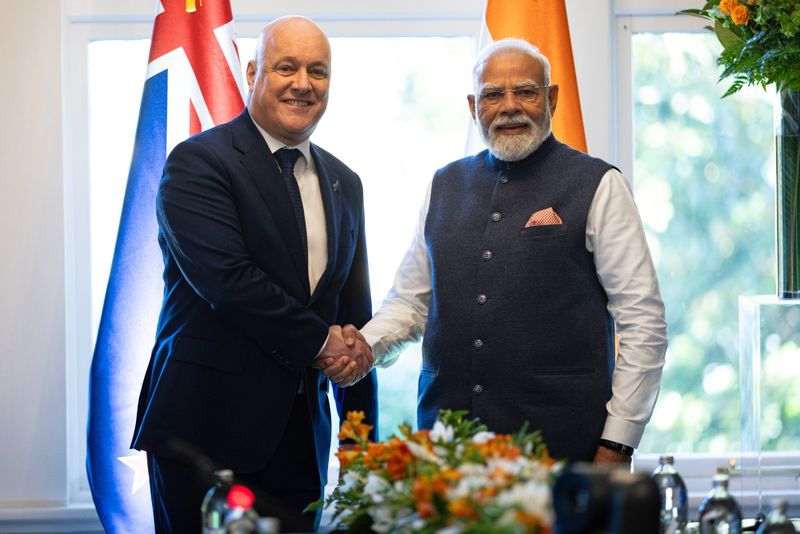
In a historic moment for India-New Zealand relations, Prime Minister Narendra Modi and his New Zealand counterpart Christopher Luxon met in Auckland on July 11, 2026, and elevated their bilateral ties to a full-fledged Strategic Partnership. The most eye-catching outcome of this summit was the ambitious target to double bilateral trade in goods and services to Rs 35,000 crore (approximately NZ$ 7 billion) by the year 2030. This is not just a number on paper — it represents a massive shift in how two vibrant democracies plan to engage economically in the coming decade.
The meeting came on the heels of the India-New Zealand Free Trade Agreement (FTA), which was signed on April 27, 2026, in New Delhi. The FTA itself was described by the Government of India as a "once-in-a-generation agreement" aimed at boosting exports, MSMEs, investment flows, skills mobility, and broader economic cooperation. Now, with the strategic partnership in place and a concrete trade target on the table, the India-New Zealand relationship is entering its most productive phase ever.
In this comprehensive article, we will break down everything you need to know about this landmark development — from the history of the FTA negotiations to the specific tariff benefits, from sector-wise opportunities to what this means for Indian exporters, students, and professionals. We will also look at the 18 concrete outcomes of the Modi-Luxon talks, including the reciprocal logistics support pact between the Indian Navy and the New Zealand Defence Force. So grab a cup of chai and read on — this is going to be a deep dive.
How Did We Get Here? The Journey from 2010 to 2026
To truly appreciate the significance of the Rs 35,000 crore trade target, we need to understand the long and winding road that led to this moment. The story actually begins way back in April 2010, when India and New Zealand first launched negotiations for a Comprehensive Economic Cooperation Agreement (CECA). Over the next five years, ten rounds of negotiations were held. But then, momentum faltered in 2015, and the talks entered a prolonged period of suspension that lasted nearly a decade.
So what went wrong? The primary sticking point was dairy. New Zealand's agri-export economy is heavily anchored in the dairy sector, and they pressed hard for meaningful entry into the Indian market. India, on the other hand, remained firmly resistant to liberalizing an industry that underpins the livelihoods of millions of smallholder farmers and occupies a structurally significant position in the rural economy. Persistent asymmetries in tariff regimes and competing imperatives around the protection of domestic industries collectively foreclosed the prospect of a concluded agreement in that earlier phase.
The breakthrough came in March 2025, when New Zealand Prime Minister Christopher Luxon was invited to India for his official visit. During this visit, the two countries decided to restart trade talks and commence negotiations towards a comprehensive Free Trade Agreement. What followed was remarkable — negotiations that progressed rapidly, with both sides demonstrating greater political commitment and expanding discussions beyond the issues that had previously stalled the talks. The draft of the agreement was completed following five rounds of talks and was formally signed on April 27, 2026 — making it one of India's fastest-concluded FTAs with a developed country.
Key Milestone Timeline: Negotiations announced March 16, 2025 | Concluded December 22, 2025 | Signed April 27, 2026 | Strategic Partnership elevated July 11, 2026 | Trade target set for 2030
India-New Zealand FTA 2026: What Does It Actually Say?
The India-New Zealand Free Trade Agreement is not just a tariff-cutting deal. It is a comprehensive economic agreement covering trade in goods and services, investment facilitation, mobility of professionals and students, customs and trade facilitation, sanitary and phytosanitary measures, technical barriers to trade, intellectual property rights, and institutional cooperation. Let us break down the key provisions that make this agreement truly transformative.
Trade in Goods: The Big Win for India
Under the FTA, New Zealand will eliminate customs duties on 100% of its tariff lines, providing immediate zero-duty access to all Indian exports upon entry into force, subject to compliance with applicable Product-Specific Rules of Origin. This is a massive win for Indian exporters who previously faced tariff barriers that made their products less competitive in the New Zealand market.
On the flip side, India has adopted a calibrated approach. India has liberalized 70.03% of tariff lines, covering approximately 95% of New Zealand's exports to India by value, while excluding 29.97% of tariff lines to protect sensitive domestic sectors. The tariff liberalization structure breaks down as follows:
| Tariff Category | Percentage of Tariff Lines | Products Covered | Timeline |
|---|---|---|---|
| Immediate Duty Elimination | ~30% | Wood, wool, sheep meat, raw hides, leather | Day One (Entry into Force) |
| Phased Elimination | ~35.6% | Petroleum oils, malt extract, vegetable oils, electrical machinery, peptones | Over 3, 5, 7, and 10 years |
| Partial Tariff Reduction | ~4.37% | Wine, pharmaceutical drugs, polymers, aluminium, iron and steel articles | Progressive reduction |
| Tariff Rate Quotas (TRQs) | ~0.06% | Manuka honey, apples, kiwi fruit, milk albumin | Quota-based access |
| Excluded (No Liberalization) | ~29.97% | Dairy (milk, cream, cheese, butter), select agricultural products, edible oils, certain metals, gems and jewellery | Protected indefinitely |
Key Sectors That Benefit for New Zealand Exporters
While the FTA is primarily celebrated for its benefits to Indian exporters, New Zealand also gains significantly in several sectors:
- Wine: Tariffs currently as high as 150% will be progressively reduced to 25% or 50% (depending on product value) over a 10-year period. A most-favoured-nation (MFN) commitment ensures New Zealand benefits from future tariff concessions that India offers to other FTA partners.
- Sheep Meat: The 33% tariff will be removed upon the FTA's entry into force, improving New Zealand's competitive position in the Indian market and aligning tariff treatment with that of Australia.
- Seafood: Duty-free access will be available for most seafood exports, including mussels and salmon, over a seven-year period.
- Fruit: A 50% tariff cut applies for large quotas of apples. Duty-free access applies for kiwifruit within a quota, and tariffs are halved for exports outside the quota. Cherries, avocados, persimmons, and blueberries get duty-free access over 10 years.
- Manuka Honey: Tariffs will fall from 66% to 16.5% over five years, representing a notable expansion opportunity.
What the FTA Means for Indian Exporters: Sector-by-Sector Breakdown
The zero-duty access for 100% of Indian exports to New Zealand is the headline-grabbing feature of this FTA. But which sectors will actually benefit the most? Let us look at the numbers and the opportunities.
Textiles, Apparel, and Leather
These are India's labour-intensive sectors that have long struggled with tariff barriers in developed markets. With New Zealand eliminating all duties on Indian textiles, apparel, leather, and footwear, Indian manufacturers can now compete on a level playing field. The FTA is expected to boost MSMEs and create jobs, particularly in states like Tamil Nadu, Gujarat, Uttar Pradesh, and West Bengal where these industries are concentrated.
Engineering Goods and Automobiles
Indian engineering goods and automobile exports will now enter New Zealand duty-free. This includes a wide range of products from auto components to industrial machinery. The removal of tariffs of up to 5% may seem modest, but in competitive markets, even small tariff differentials can influence purchasing decisions and market share.
Pharmaceuticals and Chemicals
India is already known as the "pharmacy of the world." With zero-duty access to New Zealand, Indian pharmaceutical companies can expand their footprint in the Oceania region. The FTA also includes provisions for regulatory cooperation and faster approval processes, which will further help Indian pharma exporters.
Marine Products and Processed Foods
India's marine product exports have been growing steadily. With New Zealand offering duty-free access, Indian seafood exporters can tap into a premium market. Similarly, processed foods, spices, beverages, and preserved vegetables will benefit from the elimination of tariffs of up to 5%.
Gems and Jewellery, Handicrafts
India's traditional strengths in gems, jewellery, and handicrafts get a significant boost. While certain metals and jewellery items are in India's exclusion list (to protect domestic artisans), most gems and jewellery products will enjoy zero-duty access.
| Indian Sector | Previous Tariff Barrier | Post-FTA Status | Expected Impact |
|---|---|---|---|
| Textiles & Apparel | Up to 10% MFN tariff | Zero duty | Significant boost to MSMEs; job creation |
| Leather & Footwear | Up to 5% MFN tariff | Zero duty | Enhanced competitiveness vs. China, Vietnam |
| Pharmaceuticals | Up to 5% MFN tariff | Zero duty | Expanded market access in Oceania |
| Engineering Goods | Up to 5% MFN tariff | Zero duty | New opportunities in machinery, auto parts |
| Marine Products | Up to 5% MFN tariff | Zero duty | Premium market access for Indian seafood |
| Processed Foods & Spices | Up to 5% MFN tariff | Zero duty | Growth for agri-processing enterprises |
| Gems & Jewellery | Varied MFN tariffs | Zero duty (most items) | Strengthened position in luxury market |
| Automobiles | Up to 10% MFN tariff | Zero duty | New export avenue for Indian automakers |
Services, Mobility, and Human Capital: The Game-Changer
While trade in goods gets most of the attention, the services and mobility provisions of the India-New Zealand FTA are arguably the most transformative aspects for ordinary Indians. This is where the agreement truly goes beyond traditional tariff-cutting and enters the realm of people-to-people cooperation.
118 Service Sectors Opened for Indian Professionals
New Zealand has committed to opening 118 service sectors to Indian service providers and has extended Most-Favoured Nation (MFN) treatment in 139 sectors. This substantially expands market opportunities for Indian professionals in areas such as:
- Information Technology (IT): Software development, IT consulting, digital services
- Engineering: Civil, mechanical, electrical, and software engineering services
- Healthcare: Medical practitioners, nurses, allied health professionals
- Education: Teachers, trainers, educational consultants
- Financial Services: Banking, insurance, accounting, auditing
- Professional Services: Legal, architectural, management consulting
- Telecommunications: Network services, telecom consulting
5,000 Temporary Employment Visas for Indian Skilled Workers
This is perhaps the most talked-about provision. New Zealand has introduced a dedicated quota of 5,000 temporary employment visas for Indian professionals over the next three years. The focus areas include:
- Information Technology professionals
- Engineers (all disciplines)
- Healthcare workers (doctors, nurses, caregivers)
- Education professionals (teachers, trainers)
- Construction workers
- Indian traditional medicine practitioners (AYUSH)
- Yoga instructors
- Indian chefs
- Music teachers
Student Mobility and Post-Study Work Rights
For Indian students dreaming of studying abroad, the FTA brings excellent news:
- Post-study work rights of up to three years for undergraduate and master's programmes
- Post-study work rights of up to four years for doctoral studies
- Enhanced pathways for STEM graduates and skilled professionals
- Improved visa access for Indian students in New Zealand
These provisions not only strengthen educational ties but also create long-term opportunities for talent exchange and knowledge transfer. Indian students who study in New Zealand can now gain valuable international work experience before returning to India or settling in New Zealand.
USD 20 Billion Investment Commitment: Building Long-Term Economic Ties
Beyond trade and mobility, the FTA includes a USD 20 billion investment commitment from New Zealand over the next 15 years. This is a significant sum that will strengthen long-term economic and strategic cooperation between the two countries. The investments are expected to span key sectors such as:
- Agriculture and Horticulture: Technology transfer, joint ventures, and productivity partnerships
- Infrastructure: Roads, ports, renewable energy projects
- Manufacturing: Setting up production facilities and supply chain hubs
- Startups and Emerging Technologies: Venture capital, innovation partnerships
- Forestry and Fisheries: Sustainable resource management and processing
- Food Processing: Cold chain infrastructure, food safety technology
The agreement also establishes cooperation frameworks in agriculture, horticulture, forestry, fisheries, apiculture (beekeeping), and food processing. An Agricultural Productivity Partnership will collaborate with farmers to boost productivity and integrate them into global value chains.
Did You Know? New Zealand is projected to become one of the world's largest economies over the coming decade, while India's middle-class population is expected to exceed 700 million consumers. These trends have elevated India's importance as a strategic and commercial partner for Wellington.
Strategic Partnership Elevated: 18 Concrete Outcomes from the Modi-Luxon Summit
The July 11, 2026 meeting between Prime Minister Modi and Prime Minister Luxon was not just about trade numbers. It produced 18 concrete outcomes, including 10 agreements, that elevate the India-New Zealand relationship to a new level. Here are the key highlights:
1. Strategic Partnership Roadmap
A roadmap to expand ties in the next four years was agreed upon. This provides a structured framework for bilateral cooperation across multiple domains.
2. Indo-Pacific Maritime Cooperation Framework
A framework for enhancing Indo-Pacific maritime cooperation was established. Both leaders exchanged views on the Indo-Pacific, reaffirming their shared commitment to a free, open, and prosperous region. They emphasized the importance of safeguarding sovereignty, territorial integrity, and the rules-based international order.
3. Reciprocal Logistics Support Pact
A reciprocal logistics support pact between the Indian Navy and the New Zealand Defence Force was signed. This is a significant defence cooperation milestone that will enhance interoperability and joint operations in the Indo-Pacific.
4. Maritime Security Dialogue
Both sides agreed to establish a maritime security dialogue to strengthen cooperation, coordination, and information exchange. This is particularly relevant given China's increasing assertiveness in the region.
5. Freedom of Navigation Commitment
The two Prime Ministers called for freedom of navigation and overflight, and other lawful uses of the seas, in accordance with international law, particularly the 1982 United Nations Convention on the Law of the Sea.
6. West Asia Conflict Resolution
Delving into the West Asia conflict, both leaders expressed concern over renewed escalation of tensions and called upon all parties to exercise restraint, de-escalate tensions, and ensure protection of civilians. They called for full restoration of freedom of navigation and the global flow of commerce through the Strait of Hormuz.
7. UN Security Council Reform
Both leaders pitched for "bold and effective" reform of the United Nations and affirmed their support for expansion of the Security Council. This aligns with India's long-standing demand for permanent membership in the UNSC.
8. Health and Traditional Medicine Services
For the first time, New Zealand has agreed to facilitate Health and Traditional Medicine Services under the FTA. This opens doors for AYUSH practitioners, yoga instructors, and traditional medicine experts from India.
9. MSME and Women-Led Enterprise Focus
The agreement places special emphasis on strengthening MSMEs and women-led enterprises. Dedicated cooperation and capacity-building mechanisms will improve SME participation in bilateral trade.
10. Sports, Tourism, and People-to-People Ties
The FTA is designed to benefit not just manufacturers and farmers but also students, skilled professionals, sports enthusiasts, and tourists. Collaboration in sports, tourism, and people-to-people ties is a key pillar of the agreement.
| Outcome Area | Key Agreement | Significance |
|---|---|---|
| Trade & Economy | Rs 35,000 crore trade target by 2030 | Doubling bilateral trade in 5 years |
| Defence | Reciprocal logistics support pact | Enhanced Indo-Pacific security cooperation |
| Maritime | Maritime security dialogue | Joint response to regional challenges |
| Services | 118 service sectors opened | Unprecedented access for Indian professionals |
| Mobility | 5,000 temporary employment visas | New opportunities for skilled Indian workers |
| Education | Post-study work rights up to 4 years | Attracts Indian students to New Zealand |
| Investment | USD 20 billion over 15 years | Long-term capital flows into India |
| Traditional Medicine | AYUSH cooperation framework | First-of-its-kind for New Zealand |
| MSMEs | Dedicated SME cooperation mechanisms | Inclusive growth focus |
| Geopolitics | UNSC reform support | Shared vision for global governance |
The Numbers Behind the Rs 35,000 Crore Target
Let us put the Rs 35,000 crore trade target into perspective. As of 2024-25, bilateral merchandise trade between India and New Zealand stood at approximately US$1.3 billion, with total trade in goods and services at around US$2.4 billion. The new target of NZ$7 billion (approximately Rs 35,000 crore) represents a near-doubling of the current trade volume.
| Trade Metric | 2023-24 | 2024-25 | Growth | 2030 Target |
|---|---|---|---|---|
| Total Bilateral Trade (Goods + Services) | US$ 873 million | US$ 1.3 billion | ~49% | US$ ~4.2 billion (Rs 35,000 cr) |
| India's Exports to NZ | US$ 538 million | US$ 711 million | ~32% | Target: Significant increase |
| India's Imports from NZ | US$ 335 million | US$ 589 million | ~76% | Target: Balanced growth |
| Services Trade | US$ 561 million | US$ 634 million | ~13% | Target: Major expansion |
| Investment Commitment | N/A | N/A | N/A | USD 20 billion over 15 years |
The growth trajectory is already visible. India's exports to New Zealand more than doubled between 2015-16 and 2024-25, while imports also recorded steady growth. The expansion of trade despite the absence of a bilateral trade agreement highlights both the resilience of the relationship and the untapped potential that the FTA seeks to unlock.
Trade Snapshot: New Zealand is currently India's second-largest trading partner in Oceania (after Australia). The FTA is expected to significantly close the gap and potentially make New Zealand India's largest partner in the region by 2030.
What India Protected: Dairy, Agriculture, and Sensitive Sectors
A critical aspect of any FTA negotiation is not just what you gain, but also what you protect. India has been smart and strategic in this regard. While offering significant market access to New Zealand, India has kept 29.97% of tariff lines in exclusion, covering sectors that are politically and economically sensitive.
Dairy Sector: The Red Line
The dairy sector was the single biggest sticking point in the 2010-2015 negotiations, and India has held firm this time too. The exclusion list covers:
- Milk and cream
- Whey products
- Yoghurt and fermented milk
- Cheese and curd
- Butter and other milk fats
This is a huge win for India's 80 million dairy farmers and cooperatives like Amul, Nandini, and Mother Dairy. The Dairy Companies Association of New Zealand expressed disappointment that core products such as butter and cheese had been excluded from the agreement, but this was a non-negotiable for India.
Other Protected Sectors
- Select Agricultural Products: Onions, chana (chickpeas), peas, corn, almonds
- Sugar and Artificial Honey
- Edible Oils: Animal, vegetable, and microbial fats and oils
- Arms and Ammunition
- Certain Metals: Copper cathodes, cartridges, rods, bars, coils; aluminium ingots, billets, wire bars
- Gems and Jewellery: Select items to protect domestic artisans
This calibrated approach reflects India's broader trade strategy of expanding market access while preserving policy space in sensitive domestic sectors — a strategy that has been evident in its recent FTAs with the UAE, Australia, and the United Kingdom as well.
Challenges and Concerns: The Other Side of the Coin
No agreement is without its critics, and the India-New Zealand FTA is no exception. Several concerns have been raised by stakeholders in both countries:
Concerns in New Zealand
- Dairy Industry Disappointment: The Dairy Companies Association of New Zealand expressed disappointment that core products such as butter and cheese had been excluded. New Zealand First leader Winston Peters opposed the agreement on the grounds that it disadvantaged New Zealand's dairy industry and boosted Indian immigration to New Zealand.
- Immigration Concerns: The 5,000 temporary employment visas for Indian workers raised concerns about the impact of immigration on unemployment, housing infrastructure, and race relations. The New Zealand Council of Trade Unions and the Maritime Union of New Zealand raised concerns about migrant labour exploitation and transparency.
- Regulatory Barriers: While the FTA streamlines administrative procedures, it is unlikely to lead to rapid increases in export volumes from India in highly regulated sectors. New Zealand maintains a highly stringent regulatory regime administered by specialized agencies.
Concerns in India
- Competition for Domestic Industries: While sensitive sectors are protected, Indian manufacturers in liberalized sectors may face increased competition from New Zealand imports, particularly in wool, wood, and sheep meat.
- Non-Tariff Barriers: Both governments have indicated a strong intention to address non-tariff barriers (NTBs) through the FTA, but implementation remains a challenge. Fast-tracking pending market access applications and simplifying certification procedures will require sustained bureaucratic effort.
- Rules of Origin Compliance: Indian exporters will need to comply with Product-Specific Rules of Origin to avail zero-duty benefits. This requires upgrading production processes, product design, and compliance systems.
Geopolitical Significance: Why This Partnership Matters Beyond Trade
The India-New Zealand FTA and Strategic Partnership are not just about economics. They carry profound geopolitical significance in an increasingly volatile world.
Indo-Pacific Strategy
Both India and New Zealand are maritime nations with shared interests in a free, open, and rules-based Indo-Pacific. The FTA reflects a growing convergence of interests between two Indo-Pacific democracies seeking to deepen economic cooperation, diversify commercial partnerships, and strengthen resilience in an uncertain global trading environment.
Prime Minister Modi aptly summarized this during his remarks at the talks: "As two maritime nations, our close cooperation lends new strength to the Indo-Pacific, and our ties can infuse fresh energy into achieving our shared goals of peace."
Countering China's Influence
The visit came following the recent signing of the India-New Zealand FTA and was largely focused on expanding cooperation in the Indo-Pacific against the backdrop of China's increasing assertiveness in the region. The maritime security dialogue and reciprocal logistics support pact are clear signals of a deepening security relationship.
India's Post-RCEP Trade Strategy
For India, the agreement aligns with a wider effort to expand economic partnerships through bilateral trade agreements following its withdrawal from the Regional Comprehensive Economic Partnership (RCEP) in 2019. India's recent trade policy has increasingly prioritized carefully negotiated agreements with trusted partners over large multilateral frameworks. The FTA with New Zealand, therefore, represents another step in India's evolving trade architecture.
New Zealand's Diversification Strategy
For New Zealand, the agreement offers access to one of the world's fastest-growing major economies. According to New Zealand's official assessment, India is projected to become one of the world's largest economies over the coming decade, while its middle-class population is expected to exceed 700 million consumers. The New Zealand Government views closer economic engagement with India as a means of diversifying its trade relationships and reducing the risks associated with overreliance on a limited number of overseas markets.
What Happens Next? Ratification and Implementation Roadmap
The FTA has been signed, but it is not yet in effect. Here is what needs to happen next:
- New Zealand Parliament: The agreement needs to be examined by the New Zealand Parliament, which will adopt any domestic legislation required to implement the FTA before planned elections on November 7, 2026.
- Indian Legal Review: In India, the FTA is authorized by the Union Council of Ministers led by the Prime Minister and will undergo a legal review to ensure accuracy and consistency with domestic laws in inter-ministerial consultation. If inconsistencies are found, amendments will be made through the parliamentary approval process.
- Early Entry into Force: Both Prime Ministers have resolved to work together to ensure the early entry into force of the FTA. This suggests both sides are keen to move quickly.
- Joint Committees: The FTA establishes joint committees and consultation mechanisms for regulatory cooperation, improved implementation, and transparency.
- Dispute Settlement: Institutional review and dispute-resolution mechanisms have been put in place to ensure greater predictability and confidence for businesses.
Expected Timeline: The FTA is likely to come into force in late 2026 or early 2027, following completion of domestic ratification procedures in both countries. Businesses should start preparing now by assessing tariff staging, product-specific rules of origin, quota conditions, and regulatory requirements.
Related Articles on Barristery.in
At Barristery.in, we cover not just legal careers but also important economic and policy developments that impact India. If you found this article insightful, you may also be interested in these resources from our website:
- Biswanath Singh Institute of Legal Studies, Munger — Complete Guide for Law Aspirants — Planning a career in law? This detailed guide covers admission process, fees, and career prospects at one of Bihar's emerging legal institutions.
- Legal Careers Portal — LL.B Jobs, Internships & Moot Court — Your one-stop destination for daily legal job alerts, internship opportunities, moot court competitions, essay competitions, and call for blogs from top law firms and organizations.
- About Barristery.in — Your Legal Knowledge Partner — Learn more about our mission to make Indian law accessible, understandable, and actionable for every citizen, student, and legal professional.
About Barristery.in: We are a focused, independent legal knowledge platform built by Rabi Kumar Pandit, a legal professional with a unique multidisciplinary background in History, Economics, and Law from the University of Calcutta. Our articles are personally curated to ensure accuracy and usefulness for our readers.
Conclusion: A New Era of India-New Zealand Cooperation
The Rs 35,000 crore trade target set by India and New Zealand is not just an aspirational number. It is a concrete goal backed by a comprehensive Free Trade Agreement, a Strategic Partnership, and 18 concrete outcomes from the highest level of political leadership. From zero-duty access for all Indian exports to 5,000 temporary employment visas for Indian professionals, from USD 20 billion in investment commitments to post-study work rights for Indian students, the agreement touches every aspect of the bilateral relationship.
For Indian businesses, this is a golden opportunity to expand into a developed, English-speaking market with strong rule of law and transparent regulatory frameworks. For Indian professionals, it opens doors to high-quality jobs and international experience. For Indian students, it offers world-class education with generous post-study work rights. And for the two nations, it strengthens a partnership rooted in shared democratic values, Commonwealth ties, and a strong Indian diaspora presence.
Of course, challenges remain. The FTA needs to be ratified by both parliaments. Non-tariff barriers need to be addressed. Rules of origin compliance needs to be streamlined. And both sides need to ensure that the benefits of trade reach not just large corporations but also MSMEs, women entrepreneurs, farmers, and small businesses.
But if the past is any indication, India and New Zealand have shown that when there is political will, even the most complex negotiations can be concluded in record time. The nine-month negotiation period for this FTA is proof of that. As we look towards 2030 and the Rs 35,000 crore target, one thing is clear: the India-New Zealand relationship has moved from modest engagement to strategic economic partnership, and the best is yet to come.
Stay Updated: Bookmark this page and visit Barristery.in regularly for the latest updates on India-New Zealand trade, legal developments, and career opportunities. We bring you curated, accurate, and actionable information every day.
Last Updated: July 11, 2026 | Article Published on Barristery.in


COMMENTS