
'Ram Rahim Singh's Acquittal Requires Consideration': Supreme Court To Hear Slain Journalist's Son's Appeal
After 24 years of legal battle, the apex court steps in as Anshul Chhatrapati challenges the Punjab and Haryana High Court's acquittal of Dera Sacha Sauda chief Gurmeet Ram Rahim Singh in the 2002 murder of journalist Ram Chander Chhatrapati.
1The Breaking News: Supreme Court Steps In
In March 2026, the Punjab and Haryana High Court delivered a verdict that sent shockwaves through India's legal and journalistic communities. A division bench headed by Chief Justice Sheel Nagu and Justice Vikram Aggarwal acquitted Gurmeet Ram Rahim Singh, the controversial head of Dera Sacha Sauda, in the murder case of journalist Ram Chander Chhatrapati. The High Court overturned a 2019 conviction by a special CBI court that had sentenced Ram Rahim to life imprisonment for his role in the conspiracy to murder the Sirsa-based journalist.
The acquittal came after more than seven years of appellate proceedings, during which Ram Rahim's legal team mounted a vigorous challenge to the trial court's findings. However, the verdict was not the end of the road. Anshul Chhatrapati, who has been fighting for justice for his father since he was a teenager, immediately announced his intention to approach the Supreme Court. In August 2026, the apex court agreed to hear his appeal, marking a new and potentially decisive chapter in this long-running legal saga.
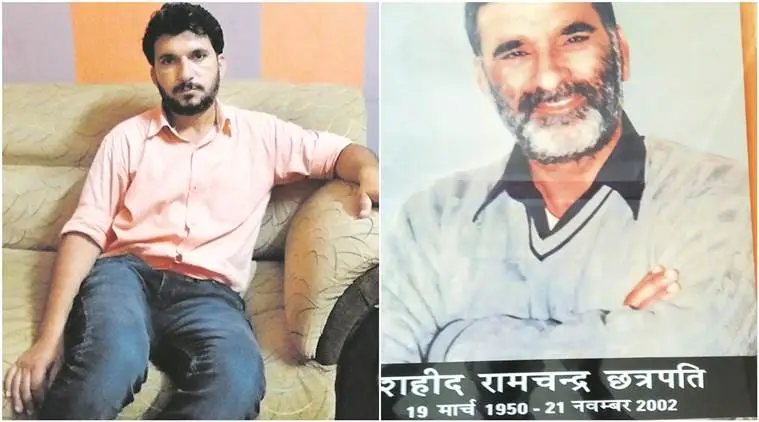
"It is highly disappointing. We will appeal against it. I do not want to say anything against the order but many things, like threats to my father, were not considered adequately. There was a lot of pressure from the Dera."
The Supreme Court's decision to hear the appeal is significant for multiple reasons. First, it demonstrates the apex court's willingness to scrutinize High Court acquittals in cases involving serious crimes against journalists. Second, it provides an opportunity for the Court to examine the evidentiary standards applied in conspiracy cases where the alleged mastermind operates through intermediaries. Third, and perhaps most importantly, it offers a chance to address the broader question of whether India's criminal justice system can effectively hold powerful religious and political figures accountable when the direct evidence against them is circumstantial.
2The Victim: Ram Chander Chhatrapati — A Journalist Who Paid the Ultimate Price
To understand the gravity of this case, one must first understand the man at its center. Ram Chander Chhatrapati was not just a journalist; he was a crusader for truth in a region where speaking out against powerful interests could be fatal. As the editor of Poora Sach (The Whole Truth), an evening daily newspaper published in Sirsa, Haryana, Chhatrapati had built a reputation for fearless reporting on issues that others in the local media preferred to ignore.
Chhatrapati was also a member of the Tarksheel Society, a rationalist organization committed to promoting scientific temper and questioning blind faith. This intellectual background made him particularly dangerous to the Dera Sacha Sauda, which had cultivated a massive following among marginalized communities in Haryana, Punjab, and Rajasthan through a combination of social welfare programs and charismatic religious leadership.
Editor of Poora Sach, evening daily in Sirsa. Member of Tarksheel Society (rationalist group). Known for exposing wrongdoing by influential individuals.
Local Hindi-language evening daily published in Sirsa, Haryana. Published reports on alleged sexual exploitation inside Dera Sacha Sauda.
Shot outside his residence in Sirsa by assailants on a motorcycle. Succumbed to injuries on November 21, 2002, at a Delhi hospital.
The immediate trigger for the murder, according to the prosecution, was Chhatrapati's publication of an anonymous letter dated May 8, 2002, addressed to then-Prime Minister Atal Bihari Vajpayee. The letter, which was also copied to the Chief Justice of the Punjab and Haryana High Court, alleged widespread sexual exploitation of female disciples (sadhvis) by Gurmeet Ram Rahim Singh inside the Dera headquarters. Chhatrapati's newspaper was among the first to publish the contents of this letter, bringing the allegations into the public domain.
The consequences were swift and brutal. On the night of October 24, 2002, as Chhatrapati sat down for dinner with his two sons and daughter, he was called outside by some individuals. Minutes later, he was shot at point-blank range. His younger son, then just 13 years old, witnessed the shooting. Chhatrapati was rushed to a hospital in Rohtak, where his dying declaration was recorded by a sub-inspector. He was later shifted to Delhi, where he succumbed to his injuries on November 21, 2002, exactly four weeks after the attack.
"When my father was hospitalised, he told us that he told the police that the Dera head was involved. He had written to the police, too, about the threats."
3The Investigation: From Local Police to CBI
The initial investigation by the Sirsa police was, by all accounts, deeply flawed. Two local carpenters, Nirmal Singh and Kuldeep Singh, were arrested for the shooting. The men reportedly worked at the Dera, yet the local police did not pursue the larger conspiracy angle. It was only after persistent pressure from Chhatrapati's family that the case began to gain traction.
In January 2003, three months after the murder, Anshul Chhatrapati petitioned the High Court seeking a CBI investigation into Gurmeet Ram Rahim Singh's involvement. The High Court took note of the family's concerns and, in November 2003, ordered the case to be transferred to the Central Bureau of Investigation. The Punjab and Haryana High Court observed that the initial police investigation was not of desirable standard, lacked focus, and had permitted important material evidence to vanish, resulting in erosion of public faith.
- May 2002: Anonymous letter alleging sexual exploitation sent to PM and CJI
- October 24, 2002: Ram Chander Chhatrapati shot outside his residence
- November 21, 2002: Journalist succumbs to injuries in Delhi hospital
- January 2003: Anshul Chhatrapati petitions High Court for CBI probe
- November 2003: High Court orders CBI investigation
- July 30, 2007: CBI files supplementary charge sheet naming Ram Rahim
- December 2008: Charges under Section 120B (conspiracy) framed against Ram Rahim
The CBI investigation dragged on for five years, during which time the agency gathered evidence suggesting a deep conspiracy. In July 2007, the CBI filed a supplementary charge sheet naming Gurmeet Ram Rahim Singh as an accused in the murder case. The charge sheet alleged that Ram Rahim had ordered the elimination of Chhatrapati after being shown the journalist's critical articles during a trip to Jalandhar. In December 2008, charges under Section 120B of the Indian Penal Code (criminal conspiracy) were formally framed against the Dera chief and three others.
The case then entered a prolonged trial phase that lasted nearly a decade. During this period, the prosecution's case rested heavily on the testimony of Khatta Singh, a former driver at the Dera who claimed to have witnessed the conspiracy unfolding. However, Singh's testimony was complicated by the fact that he had initially turned hostile, claiming that the CBI had coerced him into making statements against Ram Rahim, before retracting his hostile stance and reaffirming his original allegations.
4The Trial Court Conviction: Justice Delayed But Not Denied
On January 11, 2019, a special CBI court in Panchkula delivered its verdict. After examining the evidence presented over years of trial, the court convicted Gurmeet Ram Rahim Singh and three co-accused — Krishan Lal, Kuldeep Singh, and Nirmal Singh — of conspiring to murder Ram Chander Chhatrapati. On January 17, 2019, the court sentenced all four to life imprisonment, along with a fine of Rs. 50,000 each.
The conviction was seen as a landmark moment in India's fight against impunity for crimes against journalists. It came less than two years after Ram Rahim had been convicted in a separate case of raping two female disciples, a verdict that had triggered widespread violence by his followers in Panchkula and other parts of Haryana and Punjab. The journalist murder conviction reinforced the message that the law could catch up with even the most powerful and politically connected individuals.
| Accused | Role Alleged | Trial Court (2019) | High Court (2026) | Current Status |
|---|---|---|---|---|
| Gurmeet Ram Rahim Singh | Alleged mastermind; ordered elimination | Convicted; Life Imprisonment | Acquitted | Appeal pending in Supreme Court |
| Krishan Lal | Co-conspirator | Convicted; Life Imprisonment | Conviction Upheld | Serving sentence |
| Kuldeep Singh | Shooter (motorcycle) | Convicted; Life Imprisonment | Conviction Upheld | Serving sentence |
| Nirmal Singh | Shooter (motorcycle) | Convicted; Life Imprisonment | Conviction Upheld | Serving sentence |
However, the legal battle was far from over. Ram Rahim immediately challenged his conviction before the Punjab and Haryana High Court, setting in motion an appellate process that would take another seven years to conclude. During this time, Ram Rahim remained in prison, serving his 20-year sentence in the rape cases, but the murder conviction hung in judicial limbo.
5The High Court Acquittal: A Shock to the System
On March 7, 2026, the Punjab and Haryana High Court delivered its verdict. In a decision that stunned legal observers and the journalist's family alike, the division bench of Chief Justice Sheel Nagu and Justice Vikram Aggarwal acquitted Gurmeet Ram Rahim Singh while upholding the convictions of the three co-accused.
The High Court's reasoning, as reported in the media, centered on several key findings. First, the bench held that the prosecution had not proved the guilt of the Dera head beyond "reasonable doubt." The court observed that the trial court had not "examined the matter from the correct perspective" and that the absence of direct evidence linking Ram Rahim to the conspiracy had not been adequately discussed.
"[In India] religion, caste, sects play an extremely important role... followers cross limits and break laws when it comes to their faith."
The High Court made a particularly notable observation about the nature of religious leadership in India. It noted that the Dera head was a public figure with a huge following and that such people were known to have admirers and enemies alike. The bench acknowledged that "followers cross limits and break laws when it comes to their faith," suggesting that the murder could have been the work of overzealous followers acting without explicit orders from Ram Rahim himself.
The court was particularly critical of the prosecution's star witness, Khatta Singh. It described him as having "chosen to remain silent for a number of years and then kept on tossing from one side to the other like a ping pong ball." The bench concluded that Khatta Singh was not under any threat from the Dera and that his fear of reprisal was not the reason for his initial silence. Instead, the court was convinced that he had been coerced into giving evidence by the CBI, which was allegedly in a hurry to complete the investigation.
- Prosecution failed to prove guilt beyond reasonable doubt against Ram Rahim specifically
- Prime witness Khatta Singh's testimony deemed unreliable and coerced by CBI
- Strong possibility that the three convicted accused acted on their own accord
- CBI methodology described as "a matter of grave concern"
- Prosecution did not adequately examine the sub-inspector who recorded dying declaration
- No statement taken from doctors who treated the journalist
The court also raised questions about the investigation's handling of crucial evidence. It wondered why the prosecution did not examine the sub-inspector who recorded Chhatrapati's dying declaration more thoroughly. The recorded statement did not mention the Dera head, though Chhatrapati's family insisted that the assaulted journalist had told the officer of Ram Rahim's involvement. Additionally, no statements were taken from the doctors who treated Chhatrapati, whose condition was reportedly stable for almost a week after the shooting.
6The Road to Supreme Court: Anshul Chhatrapati's Unwavering Fight
For Anshul Chhatrapati, the High Court's acquittal was a devastating blow, but not a knockout punch. Within hours of the verdict, the 46-year-old announced that he would challenge the decision in the Supreme Court. His response was not one of despair but of renewed determination.
"We will move the apex court. We don't have any other alternative. Our legal battle will continue. The path we have walked on till date... we will explore all remaining legal remedies."
Anshul's legal battle has been nothing short of extraordinary. He was just 13 years old when his father was shot. At an age when most children are focused on school and adolescence, he was thrust into a fight for justice that would consume the next two decades of his life. He petitioned the High Court for a CBI investigation when he was still a teenager. He has spent nearly 25 years navigating India's complex legal system, facing threats, intimidation, and setbacks at every turn.
Ram Chander Chhatrapati shot outside his residence in Sirsa. Anshul, then 13, witnesses the attack.
Journalist succumbs to bullet injuries in Delhi hospital. Family alleges Dera head's involvement.
Anshul petitions High Court for CBI investigation into Gurmeet Ram Rahim Singh.
High Court orders CBI probe, noting local police investigation was substandard.
CBI files charge sheet naming Ram Rahim as conspirator in journalist murder.
Special CBI court convicts Ram Rahim and three others; sentences them to life imprisonment.
Punjab and Haryana High Court acquits Ram Rahim but upholds convictions of co-accused.
Supreme Court agrees to hear Anshul Chhatrapati's appeal against the acquittal.
Anshul has been vocal about the threats and pressure his family has faced. He has pointed out that the gun used in the murder was licensed to the Dera manager, and that a walkie-talkie set was recovered from the accused. He has questioned why Khatta Singh repeatedly changed his statements, arguing that he was under pressure due to the Dera's influence. He has also highlighted the broader pattern of violence associated with Ram Rahim's followers, including the vandalism of the office of another newspaper, Lekha Jokha, for writing critical stories about the Dera.
7Legal Framework: How Appeals Work in India's Criminal Justice System
Understanding the significance of the Supreme Court's intervention requires an appreciation of India's appellate structure in criminal cases. Under the hierarchy of courts in India, the Supreme Court sits at the apex of the judicial pyramid, with the power to hear appeals from High Courts under Articles 132, 133, 134, and 136 of the Constitution.
In criminal matters, Article 134 provides for appeals to the Supreme Court where the High Court has reversed an order of acquittal and sentenced the accused to death, or where the High Court has withdrawn a case for trial before itself and imposed a death sentence. However, the most commonly invoked provision in cases like this is Article 136, which grants the Supreme Court discretionary power to grant special leave to appeal from any judgment, decree, or order passed by any court or tribunal in India.
Appeal lies to SC if High Court certifies that case involves substantial question of interpretation of Constitution.
Appeal in criminal cases where HC reverses acquittal into conviction with death sentence, or withdraws case for trial.
Discretionary power of SC to grant leave to appeal from any judgment. Most common route for criminal appeals.
The appeal filed by Anshul Chhatrapati is particularly significant because it involves a challenge to an acquittal. Under Section 415 of the Bharatiya Nagarik Suraksha Sanhita, 2023 (corresponding to Section 374 of the old CrPC), the right to appeal against conviction is statutorily guaranteed. However, the right of a victim or their family to appeal against an acquittal is more limited.
In this case, Anshul Chhatrapati is likely approaching the Supreme Court through a Special Leave Petition under Article 136, arguing that the High Court's acquittal represents a gross miscarriage of justice. The Supreme Court has, in numerous precedents, held that while it will not lightly interfere with an acquittal by the High Court, it will do so where the acquittal is based on a perverse reading of evidence, a misapplication of legal principles, or a failure to consider material evidence.
8The Broader Context: Ram Rahim's Legal Troubles and Political Influence
Gurmeet Ram Rahim Singh's legal saga extends far beyond the Chhatrapati murder case. The Dera Sacha Sauda chief is currently serving a 20-year prison sentence after being convicted in August 2017 of raping two female disciples. He has been in Sunaria jail in Rohtak, Haryana, since his conviction, but has been granted parole or furlough on at least 15 occasions, a frequency that has drawn criticism from various quarters.
In May 2024, the Punjab and Haryana High Court had already acquitted Ram Rahim and four others in another murder case — the 2002 killing of former Dera manager Ranjit Singh. The High Court cited "tainted and sketchy" investigations in that case. Ranjit Singh had allegedly been murdered for leaking the contents of the anonymous letter that detailed sexual exploitation at the Dera. The acquittal in the Chhatrapati case, therefore, fits a troubling pattern.
- August 25, 2017: Convicted of raping two disciples; sentenced to 20 years
- January 17, 2019: Convicted in Chhatrapati murder case; sentenced to life
- May 2024: Acquitted in Ranjit Singh murder case by High Court
- March 7, 2026: Acquitted in Chhatrapati murder case by High Court
- August 2026: Supreme Court agrees to hear appeal against acquittal
The Dera Sacha Sauda boasts a substantial following across at least four states, and entire families are part of its following. The Dera at Sirsa, a veritable fortress, was established in 1948. The present head, Gurmeet Ram Rahim Singh, was the third successor who took charge in 1990. It is fairly well known that the Dera wielded considerable political and social clout in the region. The bulk of its following comprised small and marginal peasants, but some well-heeled people were also ardent followers. Political leaders of various hues were also known to pay obeisance to the Dera head and seek his support during elections.
The timing of Ram Rahim's paroles has also raised eyebrows. On many occasions, his temporary releases from prison have coincided with elections in Punjab and Haryana. In October 2024, he was granted a 20-day parole that came days before the Haryana Assembly polls. In February 2022, he was granted three weeks' furlough barely two weeks before the Punjab Assembly elections. While he has been expressly forbidden to make speeches during elections, his influence over his followers remains a significant political factor.
9Journalism Under Threat: The Larger Implications
The Chhatrapati case is not an isolated incident. India has a disturbing record of violence against journalists who dare to expose the powerful. According to various press freedom indices, India remains one of the most dangerous countries for journalists, with numerous cases of murder, assault, and intimidation going unpunished.
The case of Sheela Barse v. State of Maharashtra (1983) stands as a reminder of how the Supreme Court has historically responded to threats against those who speak truth to power. In that case, journalist Sheela Barse's letter to the Supreme Court about custodial violence against women prisoners was treated as a Public Interest Litigation, leading to landmark guidelines for the protection of prisoners' rights.
"The murder of Chhatrapati, a rationalist and a person committed to honest journalism, was a tragedy. He had exposed wrongdoing by an influential individual. The people who pulled the trigger to kill him are behind bars. Yet, was his murder only an impulsive act by fanatic followers, or were they mere instruments?"
The acquittal of the alleged mastermind while the shooters remain convicted raises deeply troubling questions about the nature of justice in cases involving powerful defendants. If the shooters acted without the Dera chief's orders, what was their motive? The prosecution's case has always been that the shooters were Dera employees acting at the behest of their leader. The High Court's finding that they may have acted independently, without explaining their motive or the connection to the Dera, leaves a significant logical gap.
For the journalistic community, the case represents a test of whether India's legal system can protect those who expose wrongdoing by influential figures. If the acquittal stands, it could send a chilling message to investigative journalists across the country: that exposing the crimes of powerful godmen and politicians may cost you your life, and even then, justice may remain elusive.
10What to Expect: The Supreme Court Appeal and Beyond
As the Supreme Court prepares to hear Anshul Chhatrapati's appeal, several key legal issues are likely to be at the forefront of the arguments. The appellant's counsel will need to demonstrate that the High Court erred in its assessment of the evidence, particularly in its treatment of Khatta Singh's testimony and its interpretation of circumstantial evidence in a conspiracy case.
The Supreme Court has, in numerous judgments, held that in cases based on circumstantial evidence, the prosecution must establish a complete chain of circumstances that conclusively points to the guilt of the accused and excludes every other hypothesis. However, the Court has also recognized that in conspiracy cases, direct evidence is rarely available, and the guilt must often be inferred from the surrounding circumstances and the conduct of the accused.
High Court failed to appreciate conspiracy evidence; Khatta Singh's testimony was wrongly discarded; CBI investigation was thorough; dying declaration mentions Dera involvement.
No direct evidence linking Ram Rahim; Khatta Singh's testimony unreliable and coerced; CBI acted with bias; shooters acted independently without orders.
Whether circumstantial evidence in conspiracy cases requires the same standard as direct evidence, or whether the nature of conspiracy permits a different approach.
The CBI is also expected to file its own appeal against the High Court's acquittal, adding the government's weight to the challenge. This is significant because the agency has consistently maintained that its investigation was thorough and that the evidence against Ram Rahim was compelling. The Supreme Court's scrutiny of the CBI's investigation methods, which the High Court described as a "matter of grave concern," will be an important aspect of the proceedings.
Beyond the legal technicalities, the Supreme Court's decision will have profound implications for the rule of law in India. If the Court upholds the acquittal, it will reinforce the principle that even powerful individuals are entitled to the benefit of reasonable doubt. If it sets aside the acquittal and restores the conviction, it will send a powerful message that the law can and will catch up with those who believe they are above it.
- Hierarchy of Courts and Justice System in India — Understand how cases travel from District Courts to the Supreme Court.
- BNSS Important Sections for Judiciary and AIBE Exams — Key provisions including Section 415 (Appeal Against Conviction) and Section 392 (Conviction or Acquittal).
- Indira Gandhi vs. Raj Narain (1975) — Landmark case on judicial review and the power of courts to hold even the highest offices accountable.
- Sheela Barse v. State of Maharashtra (1983) — How the Supreme Court protected a journalist's public interest litigation on prisoners' rights.
- Nirbhaya Case: Complete History, Investigation, Trial, Supreme Court Judgment — Understanding how the apex court handles high-profile criminal cases.
- FIR Quashing: Section, Format, Time, Grounds, Cases, etc. — Learn about the legal remedies available when criminal proceedings are challenged.
- Section 4 of BNS — Types of Punishments — The punishment framework under India's new criminal law code.
- Suo Moto in Law — Definition, Acts, Guidelines & Cases — When and how courts take action on their own motion.
The Final Chapter Awaits
The Supreme Court's decision to hear Anshul Chhatrapati's appeal represents the last judicial hope for a family that has spent nearly a quarter-century seeking justice for a journalist who paid the ultimate price for speaking truth to power. As the apex court prepares to examine the evidence afresh, the nation watches with bated breath. For Anshul Chhatrapati, this is not just a legal battle — it is a fight for his father's legacy, for the safety of journalists everywhere, and for the principle that no one, however powerful, is above the law.


COMMENTS