
Daily Current Affairs 28 October 2026
Important national and international news, government schemes, economy, science, environment, sports and exam-focused facts for UPSC, WBCS, SSC, Railway, Banking, Defence and other competitive examinations.
Read Key Highlights Practise MCQs
Current affairs are an important part of competitive examinations because they test more than the ability to remember headlines. Aspirants need to understand government decisions, economic indicators, international relations, environmental developments and the institutions responsible for implementing public policy.
In this edition of Daily Current Affairs 28 October 2026, we cover important developments reported by official government sources, including the approval of the Pradhan Mantri Viksit Gram Swaraj Yojana, the Container Manufacturing Promotion Scheme, the Khelo India Sports Goods Manufacturing Scheme, a Dearness Allowance revision for Central Government employees, India–Mexico trade negotiations and the latest Index of Industrial Production figures.
The article also explains why these developments matter for examinations. At the end, you will find revision tables, one-liners, practice MCQs with answers and a last-minute revision section.
- Daily Current Affairs One-Liners
- Pradhan Mantri Viksit Gram Swaraj Yojana
- Container Manufacturing Promotion Scheme
- Khelo India Sports Goods Manufacturing Scheme
- Dearness Allowance and Dearness Relief Revision
- Index of Industrial Production: September 2026
- India–Mexico Preferential Trade Agreement Talks
- Textiles PLI Scheme: Fourth Application Round
- Environment: Kuno Cheetah Investigation
- International Tourism Mart in Tawang
- Other Important Updates
- Important Facts at a Glance
- Practice MCQs with Answers
- Last-Minute Revision Notes
- Related Current Affairs on Barristery
- Frequently Asked Questions
- Sources and Further Reading
1. Daily Current Affairs One-Liners – 28 October 2026
Begin with these short facts. After the one-liners, read the detailed explanations to understand the background and examination relevance.
| No. | Current Affairs One-Liner | Subject |
|---|---|---|
| 1 | The Union Cabinet approved the Pradhan Mantri Viksit Gram Swaraj Yojana for 2026–27 to 2030–31, with an outlay of ₹7,395.55 crore. | Rural Governance |
| 2 | The Cabinet approved the Container Manufacturing Promotion Scheme with a total outlay of ₹10,000 crore up to FY 2039–40. | Manufacturing |
| 3 | The Container Manufacturing Promotion Scheme aims to increase annual domestic container manufacturing capacity to 7.5 lakh TEUs. | Ports and Logistics |
| 4 | The Cabinet approved the Khelo India Sports Goods Manufacturing Scheme to support a globally competitive sports goods ecosystem. | Sports and Industry |
| 5 | The Union Cabinet approved an additional 3 percentage-point instalment of Dearness Allowance and Dearness Relief, effective from 1 July 2026. | Economy |
| 6 | India’s Index of Industrial Production grew by 6.7% year-on-year in September 2026, according to the quick estimates released on 28 October. | Industrial Growth |
| 7 | India and Mexico signed Terms of Reference to formally launch negotiations for a Preferential Trade Agreement. | International Trade |
| 8 | The Ministry of Textiles announced the fourth application round under the PLI Scheme for Textiles, scheduled from 1 November to 31 December 2026. | Textiles |
| 9 | A central team was deputed to investigate the death of a young cheetah associated with Kuno National Park following firearm pellet injuries. | Environment |
| 10 | Tawang in Arunachal Pradesh was scheduled to host the 14th International Tourism Mart for the North Eastern Region from 29 to 31 October 2026. | Tourism |
| 11 | The Sports and Education Ministries signed an MoU with UNESCO to promote clean-sport values in classrooms. | Sports Education |
| 12 | The government highlighted GeM Samvad 2026 and reforms intended to improve public procurement access for micro and small enterprises. | Governance and MSMEs |
These are revision summaries. Consult the relevant official releases linked in the article for the complete scheme conditions, financial components and implementation details.
2. Pradhan Mantri Viksit Gram Swaraj Yojana
Cabinet approves a scheme to strengthen grassroots governance
The Union Cabinet approved the Pradhan Mantri Viksit Gram Swaraj Yojana on 28 October 2026. It is a Centrally Sponsored Scheme for the period from 2026–27 to 2030–31, with a total outlay of ₹7,395.55 crore.
What is the main objective?
The scheme seeks to strengthen Gram Panchayats as centres of integrated, participatory and accountable rural development planning. Local governments are important because they help identify village-level priorities, coordinate development activities and bring local needs into public planning.
In practical terms, the initiative emphasises stronger planning capacity, digital integration, financial accountability and the ability of local institutions to prepare and monitor development plans. Better local planning can help villages coordinate needs such as infrastructure, sanitation, public services and livelihood-related development within the framework of the relevant government programmes.
Important features
- Scheme period: 2026–27 to 2030–31.
- Total outlay: ₹7,395.55 crore.
- Coverage: States and Union Territories, including eligible traditional rural local government institutions, as described in the official backgrounder.
- Planning focus: Integrated and participatory development planning at the Gram Panchayat level.
- Digital governance: Digital integration and online planning and audit processes form part of the scheme's approach.
- Accountability: Capacity building and financial accountability are important elements.
Targets and exam relevance
The official backgrounder identifies annual targets of more than 2.55 lakh Gram Panchayat development plans and more than 2.55 lakh online audit plans. It also describes coordinated awareness interventions designed to reach at least one crore citizens.
For competitive examinations, connect this scheme with the 73rd Constitutional Amendment, Panchayati Raj institutions, decentralisation, Gram Sabha, local planning and accountability in public expenditure.
3. Container Manufacturing Promotion Scheme

₹10,000 crore scheme aims to strengthen domestic container production
The Union Cabinet approved the Container Manufacturing Promotion Scheme (CMPS) on 28 October 2026. The scheme has an outlay of ₹10,000 crore up to FY 2039–40 and aims to build a globally competitive container manufacturing ecosystem in India.
Why does India need container manufacturing capacity?
Shipping containers are essential for transporting goods by sea and through connected rail and road logistics systems. They help move manufactured products, agricultural goods, machinery, raw materials and other cargo between countries.
When domestic demand depends heavily on imported containers, disruptions in international supply chains can affect availability, costs and logistics planning. A stronger domestic manufacturing base can help reduce import dependence, support industrial capacity and create opportunities for related industries.
Major targets and components
| Feature | Details |
|---|---|
| Scheme name | Container Manufacturing Promotion Scheme (CMPS) |
| Total outlay | ₹10,000 crore |
| Scheme horizon | Up to FY 2039–40 |
| Present annual capacity cited by PIB | About 70,000 TEUs |
| Target annual capacity | 7.5 lakh TEUs |
| Interest subvention assistance | ₹859 crore |
| Operational expenditure assistance | ₹8,891 crore |
| Testing and certification assistance | ₹150 crore |
The scheme's interest subvention component is designed to provide assistance of 3% per annum on eligible term loans for qualifying greenfield facilities and brownfield expansions. The official announcement describes thresholds for eligible capacity, so manufacturers must consult the detailed scheme guidelines rather than assuming that every factory automatically qualifies.
The operational expenditure assistance component is intended to help eligible manufacturers bridge the cost gap between domestically produced containers and imported alternatives. Testing and certification assistance is intended to support common facilities and testing capabilities.
What is TEU?
TEU stands for Twenty-foot Equivalent Unit. It is a standard unit used to describe container capacity in shipping and logistics. A standard 20-foot container equals one TEU; a standard 40-foot container is commonly counted as two TEUs for capacity calculations.
Why is this news important?
- It connects with the Make in India initiative and domestic manufacturing.
- It is relevant to ports, maritime trade and supply-chain resilience.
- It may support industrial employment and ancillary sectors.
- It is relevant to questions about import dependence and logistics infrastructure.
The PIB announcement envisages increasing domestic capacity around ten-fold to 7.5 lakh TEUs and identifies potential for direct and indirect employment. These are scheme projections, not a guarantee that every projected job or capacity increase has already occurred.
4. Khelo India Sports Goods Manufacturing Scheme
Cabinet approves support for a globally competitive sports goods industry
The Union Cabinet approved the Khelo India Sports Goods Manufacturing Scheme on 28 October 2026. The scheme has a reported outlay of ₹1,856.67 crore for the period extending to 2033–34.
What is the purpose of the scheme?
Sports goods manufacturing connects sporting participation with industry, design, materials science, quality testing, exports and employment. A competitive domestic sector can help manufacturers develop products for Indian consumers and international markets.
The scheme aims to build a globally competitive ecosystem for sports goods. This broad objective can include strengthening manufacturing capabilities, improving product quality, encouraging innovation and supporting the ecosystem around sports equipment production. The exact eligible activities, beneficiary categories and assistance conditions must be checked in the notified scheme guidelines.
Why does sports manufacturing matter?
Sports goods production requires inputs such as textiles, rubber, plastics, metals, composite materials and precision components. It also depends on product design, testing, manufacturing standards and distribution networks.
Improving domestic production can create links between sports participation and industrial development. It may also support small manufacturers, specialised suppliers, designers, testing laboratories and workers in related industries, depending on how the scheme is implemented.
Connection with Khelo India
The Khelo India programme is associated with promoting sports participation and strengthening sporting opportunities in India. The sports goods manufacturing scheme adds an industrial dimension by focusing on the equipment and manufacturing ecosystem needed by the sports sector.
5. Dearness Allowance and Dearness Relief Revision
Additional 3 percentage points approved for Central Government employees and pensioners
On 28 October 2026, the Union Cabinet approved an additional instalment of Dearness Allowance (DA) for Central Government employees and Dearness Relief (DR) for pensioners, increasing the rate by 3 percentage points over the existing 60%, with effect from 1 July 2026.
What is Dearness Allowance?
Dearness Allowance is a component of salary provided to eligible employees to help offset the impact of inflation on living costs. Its calculation and revision depend on the applicable government rules and orders.
What is Dearness Relief?
Dearness Relief is the corresponding relief provided to eligible pensioners. DA and DR are related concepts, but one is associated with eligible employees and the other with eligible pensioners.
| Term | Meaning | Who it concerns |
|---|---|---|
| DA | Dearness Allowance | Eligible Central Government employees |
| DR | Dearness Relief | Eligible pensioners |
| Approved increase | 3 percentage points | DA and DR, as announced |
| Effective date | 1 July 2026 | As specified in the Cabinet decision |
How does a DA increase affect salary?
DA is calculated as a percentage of the relevant basic pay under applicable rules. An increase of 3 percentage points means the rate rises by three points—not that the employee's entire salary increases by 3% in every possible sense.
For illustration only, if an employee's applicable basic pay were ₹40,000, a 3-percentage-point increase would represent an additional ₹1,200 per month in DA before considering any applicable rules or adjustments. This is a mathematical example, not an official salary calculation for a particular employee.
The Cabinet announcement stated that the increase would benefit eligible Central Government employees and pensioners. The exact amount received by an individual depends on the applicable pay or pension base and the official implementation order.
6. Index of Industrial Production: September 2026
India's industrial production grows 6.7% year-on-year
The Ministry of Statistics and Programme Implementation (MoSPI) released the quick estimates of the Index of Industrial Production (IIP) for September 2026 on 28 October 2026. The reported year-on-year growth in IIP was 6.7%, using the base year 2022–23.
What is the Index of Industrial Production?
The Index of Industrial Production is an important short-term indicator used to measure changes in the volume of industrial production over time. It helps economists, policymakers, businesses and analysts understand how industrial activity is changing.
IIP is particularly useful because it provides an indication of production trends in sectors such as manufacturing, mining and electricity. It is an indicator of industrial output, not a direct measure of every aspect of the economy or the overall standard of living.
Why is the base year important?
An index uses a reference period, known as the base year, to compare activity over time. For the September 2026 release discussed here, the base year was 2022–23 = 100. When comparing IIP figures, always check the base year because a revised series may not be directly comparable with an older series without appropriate care.
| Indicator | What to remember |
|---|---|
| Index | Index of Industrial Production (IIP) |
| Releasing ministry | Ministry of Statistics and Programme Implementation (MoSPI) |
| Reference month | September 2026 |
| Release date | 28 October 2026 |
| Reported year-on-year growth | 6.7% |
| Base year | 2022–23 = 100 |
How should aspirants interpret the figure?
A 6.7% year-on-year increase means the reported index was higher than in the corresponding period a year earlier. It does not mean that every industry grew by 6.7%, nor does it mean that India's GDP grew by 6.7% in September.
Industrial production and GDP are different measures. IIP focuses on industrial output, while GDP measures the value of final goods and services produced in the economy under the national accounting framework.
7. India–Mexico Preferential Trade Agreement Talks
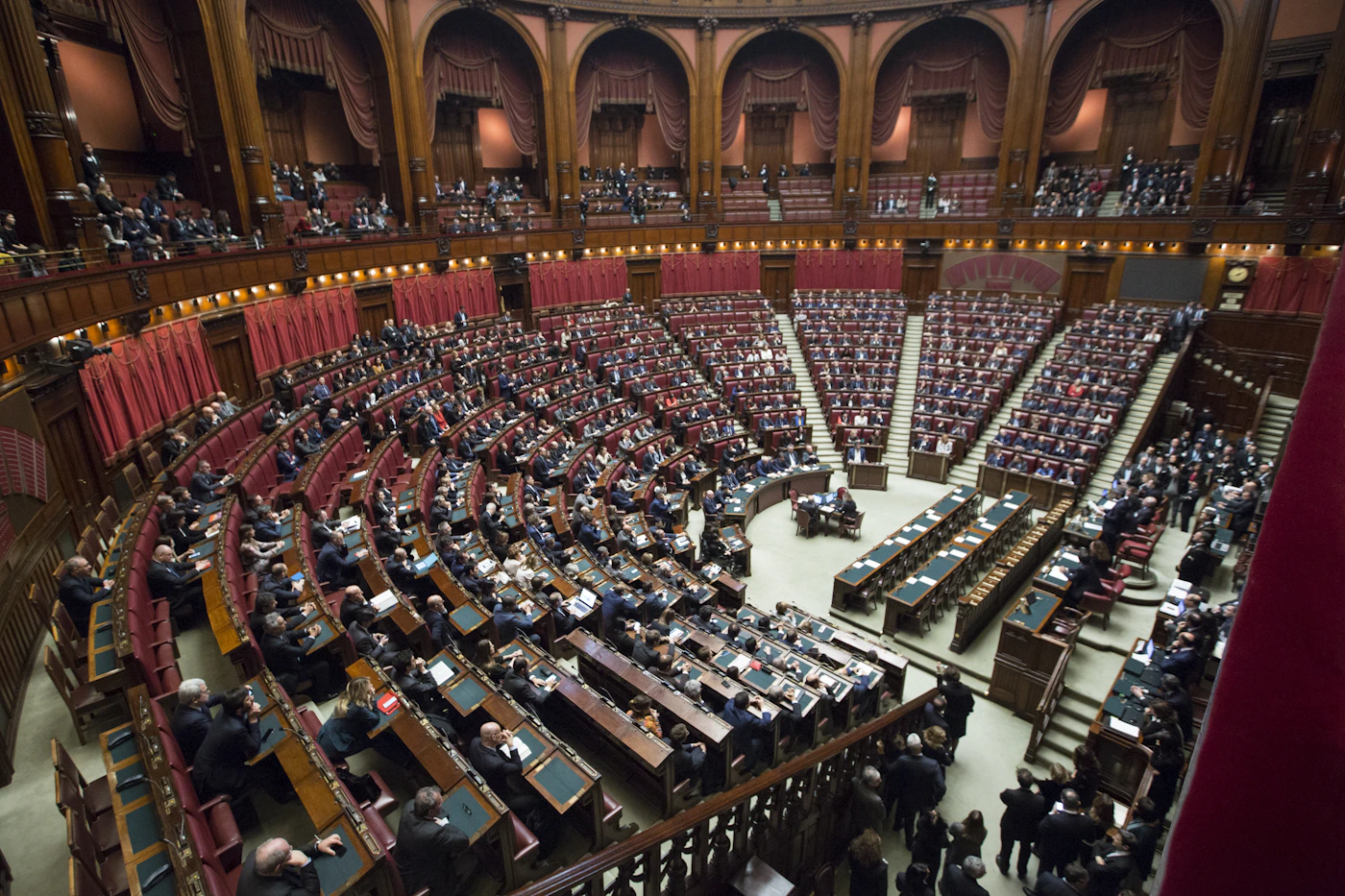
India and Mexico sign Terms of Reference to begin PTA negotiations
India and Mexico signed the Terms of Reference (ToR) for negotiations on a Preferential Trade Agreement (PTA) on 28 October 2026. The signing formally launched the negotiation process.
What is a Preferential Trade Agreement?
A Preferential Trade Agreement is an arrangement under which participating countries provide preferential treatment to selected goods or trade categories according to agreed terms. Such preferences may include reduced tariffs on specified products, subject to the negotiated framework and rules of origin.
A PTA is not automatically the same as a comprehensive free trade agreement. The scope of a trade agreement depends on the negotiated text, including which products are covered, how preferences are structured and what conditions must be met.
What are Terms of Reference?
Terms of Reference generally set out the framework for a negotiation: its scope, objectives, structure and the subjects that the parties intend to discuss. Signing a ToR signals the start of formal negotiations; it does not mean that a completed trade agreement has already entered into force.
Why are India and Mexico discussing trade?
India and Mexico are significant economies with interests in expanding trade and investment. A negotiated agreement could provide a framework for discussing market access, tariffs and trade-related cooperation. The actual benefits will depend on the final negotiated terms and whether an agreement is concluded and implemented.
For examination purposes, connect this development with India's trade policy, export diversification, bilateral relations, international economic cooperation and the difference between a PTA and a free trade agreement.
| Term | Meaning |
|---|---|
| PTA | Preferential Trade Agreement |
| ToR | Terms of Reference |
| Development | Formal launch of India–Mexico PTA negotiations |
| Key distinction | Negotiations have begun; the signing of ToR does not itself mean a final agreement is in force. |
8. Textiles PLI Scheme: Fourth Application Round
Applications scheduled from 1 November to 31 December 2026
The Ministry of Textiles announced the fourth application round under the Production Linked Incentive (PLI) Scheme for Textiles. According to the information reported on 28 October, the application window is scheduled to run from 1 November to 31 December 2026. The minimum turnover criterion for Part 2 was reduced to ₹100 crore, as described in the announcement.
Check the official government release and application information
What is a Production Linked Incentive scheme?
A Production Linked Incentive scheme is designed to encourage eligible domestic manufacturing through incentives linked to specified production or sales conditions. The detailed requirements vary by scheme and sector, so applicants must review the relevant guidelines rather than assuming that every business qualifies.
In the textiles sector, policy support is relevant to manufacturing capacity, investment, scale, product development and the competitiveness of Indian textile products. The sector is also linked to employment and export earnings.
What should applicants check?
- Whether their business falls within the eligible product categories.
- The applicable turnover and investment criteria.
- Whether the business meets the relevant Part 1 or Part 2 conditions.
- The application window and submission requirements.
- The scheme's definition of eligible sales, production and incentive calculations.
- Any additional conditions in the official guidelines or portal.
Remember that an application window is not the same as an automatic entitlement to an incentive. The application must meet the prescribed criteria, and assistance depends on the relevant approval and scheme conditions.
9. Environment: Kuno Cheetah Investigation

A central team was deputed to investigate the death of a young male cheetah associated with Kuno National Park in Madhya Pradesh after it suffered firearm pellet injuries. The development was reported on 28 October 2026 and brought attention to wildlife protection and monitoring outside as well as inside protected areas.
The reported response involved the Ministry of Environment, Forest and Climate Change, the National Tiger Conservation Authority (NTCA) and the Wildlife Crime Control Bureau (WCCB). Madhya Pradesh also reported steps involving forest and police personnel to investigate and strengthen monitoring.
Why is this relevant to Project Cheetah?
Project Cheetah is India's initiative to establish a viable cheetah population and support the species' conservation through carefully managed introduction, monitoring and habitat-related measures. Kuno National Park in Madhya Pradesh is one of the most widely associated locations in this programme.
The incident highlights several broader conservation issues:
- Protection of wildlife from illegal hunting and firearm injuries.
- Monitoring animals and responding rapidly when injuries are detected.
- Coordination between forest departments, law-enforcement agencies and conservation bodies.
- Managing wildlife and habitat risks beyond the boundaries of a national park.
- Maintaining reliable monitoring and reporting systems for conservation programmes.
Important institutions
| Institution | Relevance |
|---|---|
| Ministry of Environment, Forest and Climate Change | Central ministry responsible for environment and forest-related policy. |
| National Tiger Conservation Authority | Statutory body associated with tiger conservation; also involved in relevant wildlife conservation and monitoring responsibilities. |
| Wildlife Crime Control Bureau | Coordinates and supports action against organised wildlife crime under its mandate. |
| Kuno National Park | Protected area in Madhya Pradesh associated with the cheetah reintroduction programme. |
For examinations, focus on the location, Project Cheetah, the role of wildlife institutions and the importance of habitat and anti-poaching protection. Avoid treating preliminary reports about an incident as a final conclusion about responsibility until the relevant investigation establishes the facts.
10. International Tourism Mart in Tawang
Tawang to host the 14th International Tourism Mart for the North Eastern Region
The Ministry of Tourism, in coordination with the relevant state governments and tourism stakeholders, scheduled the 14th International Tourism Mart for the North Eastern Region in Tawang, Arunachal Pradesh, from 29 to 31 October 2026.
The event was designed to promote tourism in the North Eastern Region, facilitate interaction between tourism businesses and buyers, and showcase the region's cultural and natural attractions.
Why is the North Eastern Region important for tourism?
North East India includes diverse landscapes, mountain destinations, forests, cultural traditions, festivals, historic sites and biodiversity. Tourism can support local businesses, accommodation providers, guides, transport operators, handicraft producers and community-based enterprises.
Events such as the International Tourism Mart help connect destinations with travel trade representatives and buyers. They can also provide a platform for promoting responsible tourism, local products and regional cultural experiences.
Exam facts to remember
- Event: International Tourism Mart for the North Eastern Region.
- Edition: 14th.
- Host location: Tawang, Arunachal Pradesh.
- Scheduled dates: 29–31 October 2026.
- Broad purpose: Tourism promotion and stakeholder engagement for the North Eastern Region.
11. Other Important Updates
11.1 Sports and Education Ministries sign an MoU with UNESCO
The Ministry of Youth Affairs and Sports and the Ministry of Education signed an agreement with UNESCO aimed at taking clean-sport values into classrooms. The broad idea is to connect sports integrity with education and awareness among young people.
Clean sport refers to sporting participation based on fair play and the rules governing prohibited performance-enhancing substances and methods. Education and awareness are important parts of anti-doping efforts because athletes, students, coaches and support personnel need reliable information about the rules and their responsibilities.
Exam connection: Sports integrity, anti-doping education, UNESCO and cooperation between the education and sports sectors.
11.2 GeM Samvad 2026 and public procurement
Government e-Marketplace (GeM) Samvad 2026 highlighted reforms aimed at improving access and affordability in public procurement, including opportunities for micro and small enterprises. GeM is a digital public procurement platform used by eligible government buyers and sellers.
Public procurement reforms can be relevant to transparency, competition, ease of doing business and participation by smaller businesses. The precise features of any new reform should be verified against the relevant official release.
Exam connection: Digital governance, public procurement, MSMEs and government marketplace platforms.
11.3 PRAGATI and infrastructure monitoring
PRAGATI is associated with reviewing and accelerating implementation of important government projects and resolving bottlenecks through coordinated monitoring. Reports on the 54th PRAGATI meeting on 28 October 2026 referred to infrastructure projects across States and Union Territories.
For exam preparation, understand the broad purpose of project monitoring: coordination among departments, resolving implementation problems and tracking progress. Figures about the number or value of projects should be memorised only after checking the official release.
11.4 International environmental cooperation
India's participation in biodiversity-related international meetings highlights the connection between domestic conservation policy and global environmental cooperation. Biodiversity, biosafety, access and benefit sharing, and conservation finance are recurring topics in environment and international relations syllabuses.
Exam connection: Biodiversity conservation, international environmental agreements, sustainable development and the role of national institutions.
12. Important Facts at a Glance
Use this table for a fast revision round before attempting the MCQs.
| Topic | Important Fact | Exam Subject |
|---|---|---|
| Pradhan Mantri Viksit Gram Swaraj Yojana | ₹7,395.55 crore; 2026–27 to 2030–31 | Governance |
| Container Manufacturing Promotion Scheme | ₹10,000 crore; target 7.5 lakh TEUs | Economy |
| Sports goods manufacturing | Khelo India scheme; ₹1,856.67 crore reported outlay | Sports and Industry |
| DA and DR | Additional 3 percentage points; effective 1 July 2026 | Economy |
| IIP | September 2026 growth of 6.7%; base year 2022–23 | Economic Indicators |
| India–Mexico | Terms of Reference signed to launch PTA negotiations | International Relations |
| Textiles PLI | Fourth application round scheduled for 1 November–31 December 2026 | Industry |
| Project Cheetah | Kuno-related wildlife protection and monitoring issue | Environment |
| International Tourism Mart | 14th edition scheduled in Tawang, 29–31 October 2026 | Tourism |
| GeM Samvad | Public procurement and MSME participation | Governance |
13. Practice MCQs with Answers
Try to answer these questions before opening the explanation. They are designed for quick revision of the major developments covered in this article.
A. Municipal corporations only
B. Gram Panchayats and grassroots rural governance
C. High Courts
D. Public sector banks
Show answer and explanation
Correct answer: B. The scheme aims to strengthen Gram Panchayats through integrated planning, capacity building, digital integration and accountability.
A. ₹859 crore
B. ₹1,856.67 crore
C. ₹7,395.55 crore
D. ₹10,000 crore
Show answer and explanation
Correct answer: D. The scheme has a total outlay of ₹10,000 crore up to FY 2039–40. The ₹859 crore figure relates to its interest subvention component.
A. Trade Export Unit
B. Twenty-foot Equivalent Unit
C. Transport Efficiency Utility
D. Terminal Entry Unit
Show answer and explanation
Correct answer: B. TEU is a standard unit used to describe container capacity, based on a 20-foot container.
A. Ministry of Home Affairs
B. Ministry of Statistics and Programme Implementation
C. Ministry of Tourism
D. Ministry of Law and Justice
Show answer and explanation
Correct answer: B. MoSPI releases the IIP estimates. The September 2026 figure reported for this date was 6.7% year-on-year growth.
A. 3.1%
B. 4.5%
C. 6.7%
D. 9.8%
Show answer and explanation
Correct answer: C. The quick estimates released on 28 October 2026 reported 6.7% growth using the 2022–23 base year.
A. Preferential Trade Agreement
B. Mutual Defence Treaty
C. Currency Union
D. Common Citizenship Agreement
Show answer and explanation
Correct answer: A. The Terms of Reference formally launched negotiations for a Preferential Trade Agreement. Signing the ToR does not mean that a final agreement is already in force.
A. Eligible employees
B. Only private-sector shareholders
C. Only foreign tourists
D. Only elected legislators
Show answer and explanation
Correct answer: A. DA is a salary component for eligible employees. Dearness Relief, or DR, is associated with eligible pensioners.
A. Assam
B. Meghalaya
C. Arunachal Pradesh
D. Sikkim
Show answer and explanation
Correct answer: C. Tawang is in Arunachal Pradesh, in India's North Eastern Region.
A. Production Linked Incentive Scheme for Textiles
B. National Food Security Act
C. PM-KISAN
D. Smart Cities Mission
Show answer and explanation
Correct answer: A. The application window was announced for the PLI Scheme for Textiles, with the reported dates of 1 November to 31 December 2026.
A. Wildlife Crime Control Bureau
B. Securities and Exchange Board of India
C. University Grants Commission
D. Telecom Regulatory Authority of India
Show answer and explanation
Correct answer: A. The Wildlife Crime Control Bureau is associated with action against wildlife crime and coordination under its mandate.
A. Building a competitive sports goods manufacturing ecosystem
B. Setting monetary policy rates
C. Regulating elections
D. Managing international airspace
Show answer and explanation
Correct answer: A. The scheme aims to strengthen sports goods manufacturing and the related industrial ecosystem.
A. An agreement that necessarily creates a single currency
B. An arrangement providing agreed trade preferences to specified goods or categories
C. An agreement that automatically abolishes all national borders
D. A treaty for appointing judges
Show answer and explanation
Correct answer: B. A PTA provides negotiated preferences under its terms. Its scope is not automatically identical to a comprehensive free trade agreement.
14. Last-Minute Revision Notes
Revise these figures
- ₹7,395.55 crore: Pradhan Mantri Viksit Gram Swaraj Yojana.
- ₹10,000 crore: Container Manufacturing Promotion Scheme.
- 7.5 lakh TEUs: Target annual domestic container manufacturing capacity.
- ₹1,856.67 crore: Reported outlay for the Khelo India Sports Goods Manufacturing Scheme.
- 3 percentage points: Approved DA/DR increase, effective from 1 July 2026.
- 6.7%: Reported year-on-year IIP growth for September 2026.
- 1 November–31 December 2026: Scheduled fourth application window for the Textiles PLI scheme.
- 29–31 October 2026: Scheduled dates of the International Tourism Mart in Tawang.
Revise these concepts
| Concept | Remember this |
|---|---|
| Gram Panchayat | Grassroots rural local governance and development planning. |
| TEU | Twenty-foot Equivalent Unit, a standard container-capacity measure. |
| DA versus DR | DA for eligible employees; DR for eligible pensioners. |
| IIP | Measures changes in industrial production; it is not the same as GDP. |
| PTA | Provides negotiated trade preferences under agreed conditions. |
| PLI | Production Linked Incentive; benefits depend on scheme criteria. |
| Project Cheetah | Wildlife conservation, monitoring and habitat management. |
| GeM | Government e-Marketplace, a digital public procurement platform. |
Suggested 20-minute revision method
- Spend five minutes reading the one-liner table.
- Spend five minutes memorising the important numbers and scheme periods.
- Spend five minutes revising concepts such as IIP, TEU, PTA, DA and DR.
- Use the final five minutes to attempt the MCQs without looking at the answers.
For exams that require descriptive answers, practise writing a short response using three parts: the announcement, its objective and its significance. This helps turn factual recall into a structured answer.
15. Related Current Affairs on Barristery
Continue your daily revision with these related resources on Barristery. Use the previous day's article to maintain continuity and the current-affairs section to find more exam-focused updates.
The linked posts are supplementary study material. For current recruitment notices, scheme eligibility and changing data, always check the latest official notification or source.
16. Frequently Asked Questions (FAQs)
1. What are the important current affairs of 28 October 2026?
Major topics include the Pradhan Mantri Viksit Gram Swaraj Yojana, Container Manufacturing Promotion Scheme, Khelo India Sports Goods Manufacturing Scheme, DA/DR revision, IIP growth, India–Mexico PTA negotiations, the Textiles PLI application round and wildlife conservation developments.
2. What is the outlay of the Pradhan Mantri Viksit Gram Swaraj Yojana?
The approved outlay reported on 28 October 2026 is ₹7,395.55 crore for the period 2026–27 to 2030–31.
3. What is the target of the Container Manufacturing Promotion Scheme?
The scheme aims to increase annual domestic container manufacturing capacity to 7.5 lakh TEUs, with a total outlay of ₹10,000 crore up to FY 2039–40.
4. What is the IIP growth figure for September 2026?
The quick estimates released on 28 October 2026 reported year-on-year IIP growth of 6.7%, using 2022–23 as the base year.
5. What is the difference between DA and DR?
Dearness Allowance is associated with eligible employees, while Dearness Relief is associated with eligible pensioners. The announced increase was 3 percentage points, effective from 1 July 2026.
6. What happened in India–Mexico trade relations on 28 October 2026?
India and Mexico signed Terms of Reference to formally launch negotiations for a Preferential Trade Agreement. The signing started the negotiation process; it did not itself bring a final agreement into force.
7. What is the Textiles PLI application window?
The fourth application round was reported as scheduled from 1 November to 31 December 2026. Applicants should confirm current instructions and eligibility on the official portal.
8. Which location is hosting the International Tourism Mart for the North Eastern Region?
Tawang in Arunachal Pradesh was scheduled to host the 14th edition from 29 to 31 October 2026.
9. Is IIP the same as GDP growth?
No. IIP tracks industrial production, while GDP measures the value of final goods and services produced in the economy under national accounting rules. They are different indicators.
10. How should I prepare daily current affairs for competitive exams?
Read a reliable daily summary, understand why each event matters, memorise key figures and institutions, revise previous days' news and practise MCQs. For descriptive exams, practise short structured answers as well.
17. Sources and Further Reading
This article uses dated news summaries and official government resources as the starting point for revision. Use the original releases to confirm precise wording, scheme conditions, updated figures and implementation dates.
- Press Information Bureau – All Releases: Official government press releases.
- Pradhan Mantri Viksit Gram Swaraj Yojana: Official PIB backgrounder.
- Container Manufacturing Promotion Scheme: Official Cabinet announcement.
- Index of Industrial Production: MoSPI releases on PIB.
- India–Mexico trade negotiations: Ministry of Commerce and Industry releases.
- Current Affairs 27 October 2026: Barristery previous-day revision article.


COMMENTS